Wednesday, 8 February 2012

Dorothea Tanning


Dorothea Tanning, who died on 31st January, was a long time surrealist painter and explorer of dream worlds. She first discovered Surrealism at an exhibition in New York in 1936, but rather than a revelation it was more of an affirmation of the kind of images which she had already instinctively been making. Max Ernst visited her New York studio in 1942, and fell in love with her over a game of chess. He persuaded his then wife, Peggy Guggenheim, to include one of her paintings in an exhibition of women artists which she was putting on, thus putting her in the grimly ironical position of promoting the person who would supplant her in his affections. They married in 1946 in a double ceremony with Man Ray and Juliet Browner, each acting as the other’s witness. It was a partnership which would last 30 years, from their initial self-built home in Sedona, Arizona to various regions of France, where they moved in 1949 and remained until Ernst’s death in 1976. Whilst it was a happy relationship, it has cast her in his shadow in a view of art history still dominated by male figures. This unjust neglect was reflected in Lee Miller’s witty photographic play on perspective, in which a giant Ernst in the foreground appears to be pressing a miniature Dorothea, in the middle distance, into the desert ground as she looks up at him shaking her fist. This was no reflection on Ernst’s attitudes (although it was arguably prescient of Miller’s own future neglect), as he granted equal space for and encouraged her creative impulses. Rather it seemed to sum up critical attitudes, or more often than not, the lack of any serious attention at all. Sarane Alexandrian (he’s a bloke, by the way) typifies this dismissiveness in his Thames and Hudson book on Surrealist Art, commenting that ‘the influence of Max Ernst hastened her development towards surrealism’ and that her ‘artistic personality was to blossom as a result of her contact with him’, as if she was an adjunct to his genius, drawing from his vital essence. They did make a good photographic couple, it has to be said; she with her long dark hair and aquiline feaures, intelligent and sympathetic, he with his wild, artistic tufts of white hair and ascetic raptor beak. Tanning would be the subject of photographs, either alone or with Max, by the likes of Man Ray, Lee Miller, Henri Cartier-Bresson and Irving Penn, and also played a small part in Hans Richter’s 1957 film 8x8: A Chess Sonata in 8 Movements, alongside the likes of Jean Cocteau, Jean Arp, Marcel Duchamp, and Alexander Calder.

Sunflower Landscape
Tanning’s paintings are filled with recurrent elements: doors opening onto mysterious spaces, sometimes multiplying into a profusion of potential portals; sheets and tablecloths, folded and scrunched up into suggestive forms (often looking like cabbages or lettuces) or laid out, ridged and gridded with sharp creases; roots and ragged, fluttering shapes, half material, half immaterial, like smoke or flame; unnerving children with blank stares, or women gazing into some far off distance, or focussed on inner worlds; mysterious interiors filled with suggestive objects; blue boats; and giant Pekingese dogs. In one disconcerting photographic collage, she depicts herself, lounging on a chaise longue with a peke on her lap, with a dog’s head. Perhaps most of all, she is associated with sunflowers, however, which exert a powerful and not altogether benevolent symbolic presence in her works of the early 40s. Sunflower Landscape of 1943 has a strange doll-like child in a pink night dress communing with a disturbingly anthropomorphised sunflower, which has green breasts, its distended trumpet of florets forming a protuberant face and its petals a mane of hair. She stands on a desert plain riven by a gaping crevasse on which giant stands of sunflowers rise beneath the star-flecked sky, lit by a moon which itself has been eclipsed by the face of another sunflower. Rapture from 1944 shows that her work could be as ecstatic as it could be disturbing and inward, however, its giant sunflower head hovering in a blue sky, casting its radiance over the wide expanse of the desert landscape below.

Tanning was friends with the ballet choreographer George Balanchine, and designed the sets and costumes for several of his productions. Bayou, from 1951, was particularly memorable, with its backdrop of bulbous, twisted trees draped with exaggerated pelts of Spanish moss painted in cool, moonlit blues looking like it could be an illustration for some Tolkienesque subterraenean world. In the 1950s and 60s, her work took on a semi-abstract quality, tonal studies in which female forms manifested themselves in fragmentary fashion. In the late 60s and 70s, she created sculptures made out of soft materials; entwined tangles of limbs and torsos, and gaping ragged toothed maws. They’re uncannily like some of the soft sculptures produced by Sarah Lucas, and included in the recent British Art Show. Tanning tends to place hers within larger installations, however, setting them within domestic contexts: in front of doors, emerging from stoves, exploding through walls or as pieces of furniture themselves. Fleshy forms and domestic spaces fusing in a suggestive way. Tanning continued creating throughout her latter years, and also turned to writing, like the similarly long-lived surrealist Leonora Carrington, who died last year (mining your subconscious is evidently a healthy activity). She produced memoirs, poetry and a novel, Chasm, published in 2004. This is a piece of desert gothic which seems to recreate her artistic vision in prose form. She was always fearsomely unfettered in her imagination, in much the same way that Angela Carter was. I can imagine them collaborating on an illustrated version of The Infernal Desire Machines of Doctor Hoffmann or The Passion of New Eve.

Eine Kleine Nachtmusik
The Tate Gallery owns five pieces by Tanning, which show the breadth of her work and its development over the years. Eine Kleine Nachtmusik (1943) is the best known of her paintings. The hotel landing upon which its dream events are staged is mysterious in its very anonymity. The cracks in the walls seem more like folds, as if the whole structure is provisional, an interior set rapidly erected. The girl leaning exhausted against the door looks like she’s just wrestled with the animated sunflower, one of its petals grasped like a rag in her hand. The other girl still appears to be umbilically connected to its broken stems. Her hair flows upwards, as if the corridor has areas free of normal earthbound gravity, rather like sections of the passageways of the Hotel des Folies-Dramatiques through which the artist floats in Jean Cocteau’s film Blood of a Poet. They are both clothed in ragged strips of bundled and bunched white fabric. At the end of the corridor, following its red carpeted trail, a door is slightly ajar, a burning orange-yellow luminescence visible within, perhaps indicating the presence of more of these uncanny flowers. Some Roses and Their Phantoms (1952), which is currently on display at the Los Angeles County Museum of Art, depicts the surface of a table, covered with a white cloth squared off by sharp creases and ridged by a landscape of folds. Folded and scrunched up forms lie on the surface or on a plate, either scrunched up napkins or leaf-head vegetables – cabbages or artichokes. A creature which is half folded napkin, half insect probes about it with long, jointed legs. Another scrunched up cloth or vegetable form peers over the edge of the table with one watchful eye. The brown, soil-coloured wall beyond is rent by tears which could also be folds. A Mi-Voix from 1958 is one of Tanning’s semi-abstract works, a study in greys and whites in which elements of the female form are made manifest in an angular, fractured style reminiscent of early cubism, organised around a central axial ‘stalk’ which could be vegetable, mechanical or a piece of furniture. Pin Cushion to Serve as a Fetish (1965) is one of her earlier soft sculptures, a black vehlvet form with an orange mouth (which could just as well be the other end, of course), with pins already stuck in. It looks like a more pliable version of Henri Gaudier-Brzeska famous modernist sculpture Bird Swallowing Fish (1914). Nue Couchee (1969-70) is another soft sculpture, this one of a reclining torso with distended, intertwining limbs, their rubbery elasticity offset by the sharp angularity of the elbows. The nobs of the vertebrae in the back are created by table tennis balls stuffed inside. It’s a disturbing figure which you never want to see shifting into It’s a disturbing figure which you would never want to see shifting into alternately jerky and sinuous motion, like the spirit of Sadako crawling out of the TV screen in Ringu. Not that this seems likely with this inert, floppy form, which resembles some pitiful discarded reject from an experiment in gene splicing. Maybe in your dreams, however, crawling across those suggestively folded and crumpled sheets.

Friday, 3 February 2012

Atkinson Grimshaw at the Guildhall Art Gallery


The Victorian artist Atkinson Grimshaw, known for his atmospheric moonlit nocturnes, who was the subject of a recent exhibition at the Guildhall Art Gallery in the City of London. It’s unmistakeably the name of a Yorkshireman, which you find yourself almost irresistibly pronouncing in the flat-vowelled, no-nonsense drawl of that northerly county, almost a country unto itself. It doesn’t sounds more like the name of an industrialist than a painter, and indeed, his strict Baptist parents were aghast when he showed an interest in becoming an artist, actively discouraging such an unremunerative and impractical choice of career. At the time of Atkinson’s birth in Leeds in 1836, his father was a policeman, although he later became a worker on the area’s rapidly expanding railways, whilst his mother was a shopkeeper at a grocer’s. Atkinson followed in his father’s footsteps and, at the age of 16, went to work for the Great Northern Railway as a clerk. He studied painting and practiced his art in his spare time. He could pick up examples of the latest styles, in particular those of the pre-Raphaelites, in exhibitions put on by the Northern Society (based in Leeds) and learn art history from the books in Leeds Library, a collection open to all through subscription. His marriage to Frances Hubbarde, affectionately known as Fanny, gave him a bit more leeway, as she was the daughter of the proprietor of the Wakefield Gazette. But he was always conscious of the need to make a living from his painting, and to produce a quantity of work which would appeal to a wide enough market in order to so.

Bowder Stone, Borrowdale
His early paintings show the influence of the pre-Raphaelites, and in particular their painstaking attention to the minutiae of the natural world. Many of these works took their overall composition, or extracted details from, photographs, which could be studied at leisure in the studio. The atmosphere and detailed representation were undoubtedly drawn from direct observation, however. Grimshaw eschewed the moralising or symbolic aspects of the pre-Raphaelites’ work, allowing his landscapes or nature studies to stand on their own merits, and project their own emotional ambience. The vistas of the Lake District and the Yorkshire Dales, of Blea Tarn, Nab Scar and Ingleborough from under White Scar, provided him with wild and dramatic scenery. Using emerald and mossy greens, distance hazed purples and heathery violets, and bracken browns, he imbued them with a shimmering, slightly otherworldly stillness. They are largely depopulated, devoid of traces of human presence other than in the snaking dry stone walls, wayfarer’s huts, lakeside cottages, and the ladder straddling the side of the Bowder Stone in Borrowdale. They have a super-real clarity which precludes the changeable drama of Romanticism, even when, as in Ingleborough From Under White Scar (1868), a storm is sweeping in from the head of the valley. There is nothing of Turner’s violent vortices of dark cloud and baleful light against which clusters of human figures struggle. Perhaps Yorkshiremen are better used to grim weather, and take a more sanguine view as a result. Whilst he was living on the North Eastern coast, Grimshaw did paint a couple of pictures which conformed more to Romantic subject matter: The Burning of the Spa Saloon (1876) and In Peril (1879), with its brazier fire beacon blown into sparking trails by the storm winds, and sea spume crashing over the sea wall, as figures huddle against the elements to watch a boat struggle to reach the harbour. But these are exceptions, uncharacteristic of his work as a whole.

Autumn Glory: The Old Mill
If Grimshaw avoided the grand drama of Romanticism (although he was romantic enough in spirit to name many of his children after the Arthurian characters in Tennyson’s Idylls of the King), he definitely exhibited a taste for the gothic, in line with the neo-gothicism of the time. His paintings show a fascination for the romance of ruins, and for old buildings veiled or swallowed up by nature. An important transitional picture, Autumn Glory: The Old Mill (1869) frames the Elizabethan building in the background, illuminated in green-tinted sunlight, with tree branches. The dark autumnal woodland, with densely thicketed undergrowth, forms the foreground and, with tendrils and twigs tracing exploratory, probing lines across the mill’s brickwork, seems to threaten to invade and overwhelm the building entirely. Full Moon Behind Cirrus Cloud from the Roundhay Castle Battlements (1872), as the exhaustively all-encompassing title makes clear, views the nocturnal expanse of the Leeds park from the vantage point of the old ivy entwined crenellations. Grimshaw’s favourite season was definitely autumn, and paintings like October Gold (1893), November Morning (1883), and Autumn Regrets (1882),with its black clad lady reclining wistfully on a stone garden bench, make full use of the golden morning or evening light and the burnished browns of the leaves clinging to the trees and carpeting the ground.

Iris
Grimshaw’s famous fairy painting Iris (it’s widespread popularity reflected by a Victorian postcard presented in the exhibition) is also a study in Autumnal colours and light. The pointillistic scatter of coloured phospor spots (reds, greens, yellows and blues) radiating from Iris’ iridescent wings diffuses to blend with the general shimmering luminescence permeating the woodland spaces surrounding the lake, over which she hovers like a phantasmagorical dragonfly. He is like a seasonal spirit, a herald of autumnal atmospheres. Whilst she is in some ways typical of the subjects of Victorian fairy painting, she is noticeably more solid and real. Grimshaw drew her from his live in model, Agnes Leefe, turning her recling form around so that, in the painting, it hung suspended in the air. As a result, his Iris differs from the fey, fragile figures of Richard Dadd or John Anster Fitzgerald. Rather than taking A Midsummer Night’s Dream or The Tempest as his inspiration, Grimshaw turned to Greek mythology. Iris is the goddess who mediates between the worlds of the divine and the human. She leaves rainbow trails in her wake as she travels between them.

Knostrop Old Hall, Early Morning
Grimshaw and his family moved to their own gothic pile in 1870, renting the 17th century mansion Knostrop Hall, which lay about 2 miles to the east of Leeds. With its overgrown garden, wild growth garlanding old statues and fountains, and its jumble of stone gates, gables, towers, panelled windows and stacked chimney rows, it was the ideal setting for his atmospheric autumnal studies. Knostrop Old Hall, Early Morning, painted in the year they moved in, places the house in the background, viewed from the perspective of the garden. This is a place of neglect and decay, wild nature usurping the order and ornamentation of human cultivation. Long, distended wintry branches reach out spindly, twiggy fingers in an almost Arthur Rackham-esque fashion. A stagnant pond, brown with leaf mould, has a verdigrised fountain at its centre, long-dry. An abandoned and half-buried lawn roller, handle stretched flat out, rests where it was last laid down, many seasons ago. A haphazard heap of terracotta pots and pot shards fill an old circular flower bed, now a walled town for mice, frogs and hedgehogs. Ivy sends its dark, trailing tendrils in all directions, seeking something to strangle. Blackbirds sift through the leaf litter piled in drifting layers across the fast disappearing plots. Beyond the walls of this hushed, secret space, a farmer with horse and plough can be hazily glimpsed in the morning light traipsing up the hill, half a world away. This is a place which seems to invite haunting.

Grimshaw would also paint Knostrop and other houses from the perspective of the roads which negotiated their boundary walls. They would be seen over the walls’ brim and through intersecting tree branches, windows glinting in the sun, or glowing with orange light from within at night. The moonlit, morning or evening luminescence of these pictures makes everything seem immanent, suspended. Buildings and people become mysterious, as if seen through a veil. There is often a female figure walking away in the middle distance, indistinct and with her back to us. These lonely figures, just beyond the limits of ready identification, appear slightly spectral, an effect enhanced by the passage of time. A shawl could easily be a shroud. This is particularly the case in the richly, eerily atmospheric 1872 painting Tree Shadows on the Park Wall, Roundhay Park, Leeds. Here, it’s not certain whether the dark, shadowy, faceless figure is moving away from or gliding towards us. These too are haunted pictures, and appropriately enough, a detail from one was used as the cover for the Oxford Book of English Ghost Stories. Sadly, Atkinson and Fanny left some ghosts of their own at the Hall. In 1874, three of their young children, Clara, Herbert and Gertrude, died from diphtheria. Gertrude had been a particular favourite of Atkinson’s, and there is a desperately sad watercolour sketch included in the exhibition; A small circle of paper upon which he painted her in just after she had died, a memento in which he captured the last fading flush of life still blooming her cheeks. Agnes Leefe, a young actress who had come to live at Knostrop in 1879, acting as Atkinson’s model and studio assistant, as well as providing other services within the household. Died there in 1890 from consumption. The Grimshaw’s had rented another house in Scarborough in 1876, the mock-gothic retreat of Castle-by-the-Sea in Scarborough, in order to get away from Knostrop, but it remained their base, and Atkinson himself died there in 1893, on Halloween.

Boar Lane, Leeds by Lamplight
Grimshaw is best remembered for his moon and gaslit nocturnal pictures, which became his signature mode, adapted to various settings. One of the earliest of these was his Whitby Harbour by Moonlight (1867), in which the waters of the River Esk reflect the illumination of the full moon, which shines through dappled cloud, the yellow gaslit interiors of the surrounding buildings, and the twin red beams of the lamps on the bridge. Grimshaw would go on to paint other nocturnal harbour scenes, as well as depicting the night streets of busy town centres in the rapidly expanding industrial areas of the north. These pictures are characterised by a soft-edged, green-tinted lunar illumination, balanced by the buttery yellowish glow spilling out from the houses and shopfronts. They are also punctuated by the scattered twinkle of gas lamps, sharp and focussed in the foreground, fading to hazy blurs as they recede into the distance; an array of urban constellations. In Boar Lane, Leeds by Lamplight (1881), it is the yellow of gaslight which predominates. In Princes Dock, Hull (1887), the greenish haze of moonglow is the presiding tone. Small, bright points of red or emerald green puncture these miasmic atmospheres, either in the form of harbour lights, cab lamps or the illuminated jars of coloured liquid in a chemist’s window. These street or harbour scenes tend to be depicted just after a rain shower. People carry just furled umbrellas, or are in the process of folding them up. This is partly northern realism, but it also allows for the reflection of light off rain-soaked cobbles, and glints from wet, wheel-polished tram rails.

Silver Moonlight
Grimshaw also painted the tree-lined outskirts of the city, and the farms and fields which lay beyond it, bathing them in his nocturnal moonglow. His moons tend to be full, circled daubs of creamy paint, and they are often set in mottled, broken cloud, scabbing the sky with luminous plates. Grimshaw’s moonlight radiates a pale green luminescence, permeating everything and creating a subaqueous viridian ambience. This creates an otherworldly atmosphere, redolent of science fiction magazine and paperback covers, in which the skies and seas of alien planets are coloured in a similarly rich and unearthly fashion. This is the green miasma in which the world is enveloped in HG Wells’ novel In the Days of the Comet, after the comet’s tail has swept through the upper atmosphere. It’s also the green colour to which the sky sickens as the alien harvesting machine probes the planet in Nigel Kneale’s final 1978 Quatermass story. In these borderland pictures, the light is broken up by the complex weave of winter tree branches, as opposed to the more linear grid of ships masts and rigging in the harbour or Thameside paintings. These branches also cast moonshadows which, overlaid upon pavement, rough road surface or ploughed field (filled with reflective puddles), produce an effect of marbled veining.

Roundhay Park
In 1872, Grimshaw was commissioned by the Leeds Corporation to paint three views of the city’s Roundhay Park, which they wanted to turn into a public space. Grimshaw produced three nocturnes, showing the park largely depopulated, at the time the public were least likely to be using it. The idea of Roundhay as a public park, filled with bustling life during the day time, makes these depictions of its quiet nocturnal aspect all the more haunting. These are landscapes pregnant with absence, the pathways and viewpoints which would be so popular in the daylight hours empty save for the odd lonely, brooding presence.

Snow and Mist: Caprice in Yellow Minor
Grimshaw moved down to London for a couple of years between 1885-7, in a frankly commercial move designed to swiftly earn some much needed income. This did allow him to move near to one of his great influences and inspirations, James Abbot McNeill Whistler. Grimshaw lived and had his studio in Manresa Road, Chelsea, just around the corner from Whistler’s residence in Tite Street, with its immaculate Aesthetic architecture and interiors. He struck up a casual acquaintance with Whistler, who knew most of the artists lived around the Chelsea area. He had always been something of a model for Grimshaw; His copy of the artist’s book The Gentle Art of Making Enemies, included in the exhibition, is annotated, with certain passages highlighted. Grimshaw created his own versions of the Aesthetic interior at Knostrop Hall and Castle-by-the-Sea, and used them in a number of paintings in the Aesthetic style. There are tasteful arrangements of blue and white china, Japanese fans, oriental fabrics, with Whistler-like women languorously draped across chaises longues, slumped in Chinese chairs or gazing pensively into the half distance in conservatories full of exotic blooms. In the last years of his life, Grimshaw would explore new areas, painting small tonal studies in the manner of Whistler’s Colour Symphonies. The blue greys of The Port Light most resembles one of Whistler’s London nocturnes. Snow and Mist: Caprice in Yellow Minor (1892-3) borrows its title from Whistler’s correlations of musical and visual composition for its study of whites and beiges. Knostrop Cut, Leeds, Sunday Night, painted in the last year of his life, combines the golden hour radiance of warm oranges and yellows with the brown of boats and muddy towpath.

London, View of Heath Street by Night
The paintings which Grimshaw produced in London are essentially replications of the northern nocturne style, with the prominent inclusion of well-known landmark buildings such as Big Ben and St Paul’s, and the depiction of the clubland and theatre districts of Pall Mall and Piccadilly guaranteeing commercial appeal. One of the most effective is Reflections on the Thames, Westminster, painted during an earlier visit to the city in 1880. This shares the characteristics of his signature nocturnes, with its green-tinged skies, full moon behind dappled cloud (here echoed by the palely glowing face of Big Ben), gaslit points of light and reflecting waters. But it differs in its foregrounding of human activity, unsenstationally observing women, both fruit sellers and prostitutes, parading up and down the Embankment. The touch of red which generally appears in Grimshaw’s paintings in the form of a light (and there is one here, too) is present in the form of bright splashes in the patterns of the women’s dresses and bonnets. The symbol-stuffed moralising of the pre-Raphaelites and other Victorian artists when approaching modern subjects is rejected in favour of an understated wistfulness, with the woman in the foreground leaning on the embankment wall and gazing out over the moonlit waters, alone with her thoughts. Grimshaw thus grants her an individual humanity, rather than consigning her to that sociological type which the Victorian’s wrung their hands about so much – the fallen woman. There was often a wistfulness about Grimshaw’s female subjects (and he very seldom portrayed men), which perhaps was in keeping with the autumnal tone of much of his work. The women of Il Penseroso (1875), Snowbound (1883-5), Fiametta (1883), and Autumn Regrets (1882) all seem lost in their own, slightly melancholy private worlds. Another of his best London paintings takes us out of the centre and up to Hamstead. London, View of Heath Street by Night is an after the rain nocturne with the woman with the umbrella, a figure who appears in several Grimshaw paintings, here a shadowy figure in the foreground, standing by a kerbside bollard. It’s a view which can still be seen, so get a postcard, travel up on the Northern Line, and compare past with present.

Friday, 27 January 2012

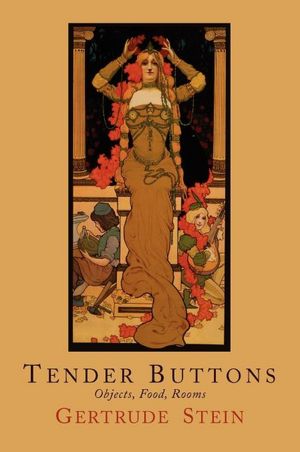
Tender Buttons, Trish Keenan and Gertrude Stein


A little over a year has gone by since the untimely passing of Broadcast singer and writer Trish Keenan. Browsing in a bookshop the other day, I noticed a copy of Gertrude Stein’s Tender Buttons, which had exerted a great influence on her approach to lyric writing, and to making music in general. Never one to disguise the source of her inspirations, she wrote a song called Tender Buttons, and Broadcast’s fourth LP took its title from it. I was interested to read Stein’s work (which can loosely be described as a prose poem) and trace some of the ways in which its style and its ideas about associative, semi-automatic writing, sound and sense translated into the Tender Buttons (and Witch Cults of the Radio Age) songs. And so I began to beat a trail through its knotty, meandering text – as you can too (it’s over here at Project Gutenberg).

Gertrude and Alice in Paris
Stein wrote Tender Buttons in 1912 whilst she was on holiday in Spain with her lifelong partner Alice B Toklas, whom she had met five years earlier, and with whom she lived in Paris. It’s a work which deliberately dismantles the structure and sense of language, and which has no readily definable sense of progression or cumulative meaning. It incorporates a strong sense of serious playfulness – wordplay and the delight in toppling and tumbling the blocs of language. There is certainly no story here, nor any comprehensible depiction of reality as it’s generally perceived. Stein’s work is of its nature hermetic. It expresses the specificity of a unique individual consciousness (all individual consciousnesses being unique) with all its private accumulation of experience, opinion, and self-regard, revised and edited in memory. With no attempt at explanation, clarification or contextualisation, this is an internalised self-portrait, viewing the world seen from a particular perspective and further refracted through personal linguistic association. Such unapologetic and unedited hermeticism ultimately leads to a cul de sac, to isolation and artistic solitude, and is not a form which is worthy of pursuing beyond the occasional experiment. The personal insights which the techniques of semi-automatic writing and unconscious word association provide have to be shaped and recast, or placed in a more universal context in order to communicate with other people with any degree of clarity. Trish seems to reflect upon the danger of becoming isolated in a private world of hermetic meaning in the line ‘in autosuggested pathways you are caught’ from the Tender Buttons song I Found the F.

An obvious comparison with the prose style of Tender Buttons would be the stream of consciousness passages in Ulysses (Stein and Joyce knew each other in Paris, although they didn’t exactly get on) which attempt to encompass the mercurial rush of the mind’s associative, semi-conscious buzz and chatter in unpunctuated prose. What structure Tender Buttons has is created by its division into three sections labelled Objects, Food and Rooms. Within these categories, subheadings are collected; a random assortment of objects, some of a surreal and largely notional nature; and a menu of foodstuffs and accompanying words associated with the act of eating (dinner, cooking, cups, breakfast etc.). The Room section has no sub-headings, proceeding in a series of discrete paragraphs, ranging from single sentences to lengthy passages. It is defined by a general sense of domestic interiority and spatial awareness, with words such as corners, table, drawer, chair, floor, roof, door, chair and looking-glass rooting it in a particular sense of place. The sense of a self located in a particular domestic space comes through in various of Trish’s lyrics for Broadcast songs, from the title of their second single, Living Room, to the lines ‘interpret the rooms’ from Tears in the Typing Pool’, and ‘in today’s room with today’s view’ from ‘The Be Colony’. It is also present in Trish’s story Life of a Dummy, in which the interior voice of Marie says ‘my room caverns me. I hear the corners of it’.

Portrait of Gertrude Stein by Picasso
The fractured nature of Stein’s prose, its shattered syntax, reflects her attempt to pay attention to and bring to bear all of her senses in recording her impressions and thought processes, and to continuously shift the angle of her perception. She was an enthusiastic patron and collector of modern art, and an early champion of Picasso and Braque when their work was still receiving general condemnation. She later affirmed in her 1938 book on Picasso that Tender Buttons was an attempt to create a literary equivalent to the prismatic effects of cubist art. Commenting that it was her ‘first conscious struggle with the problem of correlating sight, sound and sense and eliminating rhythm’, she seemed to view it as both a visual work, with the look of the words on the page being a part of the whole, and a semi-musical one, in which the words come to life when read out, aloud or in the head. There is a rhythm in it, too, with lines varying in length, and commas and other punctuation sporadically if unconventionally used. But it does avoid the traditional metrical cadences of poetry or incantatory prose. It possesses a more elastic rhythm, the shifting, rolling, asymmetrically accented beats of free jazz – Rashied Ali rather than Elvin Jones.

Its method of following associational lines of thought has led to the idea that Tender Buttons is a piece of automatic writing, a direct outpouring from the unconscious with little mediation on the part of the conscious mind. Stein had shown an early interest in experimental psychology, and studied the subject from 1893-7 at Radcliffe College (an educational college for women formally connected with Harvard) under the tutelage of the renowned and pioneering psychologist and philosopher William James. She took part in some experiments into what became known as Normal Motor Automatism. This phenomenon was observed when the subject’s attention was divided between two activities, both requiring intelligent engagement – say writing and conversing. One or other would exhibit a form of automatism in which the normal structures and controls of consciousness would break down and a ‘second personality’ would appear to manifest itself. These experiments (and Stein’s co-authored paper about them) later formed the basis of an argument put forward by the psychologist BF Skinner in a 1934 article accusatorily entitled ‘Has Gertrude Stein A Secret?’ Skinner was a behaviourist with the view that human beings were programmable through the scientific application of a series of positive and negative reinforcements. Such techniques could be used by a rational and benevolent technocratic elite comprised of the likes of Skinner to shape society. He cast his ideas in fictional form in the utopia Walden Two, where they lead to a paradise of human happiness. Such dreams immediately dissipate when exposed to the air of the real world, of course. Given his belief that the mind was a mechanism open to moulding and manipulation, it suited him to suggest that Tender Buttons was a piece of automatic writing, akin to what Stein had produced in the Normal Motor Automatism experiments. She denied that this was the case. The abandonment of grammatical form and meaning and the seemingly random leaps of loosely associational sense may have been akin to the products of automatic writing. But this was a piece produced under conditions of intense concentration rather than deliberate distraction or dissociation. This concentration extended to the act of writing itself, the physical production of words on paper. The appearance of these words on the page suggested further variations or connections, so that the piece becomes as much about language itself and its translation into written form as it is about the expression of a particular mental state, conscious or unconscious, as it passes through a series of instants.

Whilst acknowledging that she made extensive use of automatic writing (‘that’s where most all of my lyrics come from’, she said in a September 2005 Wire Jukebox interview) and other associative techniques such as cut ups in the development of song lyrics, Trish was also wary of ceding the creative process to unconscious forces. Talking about the role of improvisation and chance in the making of the Witch Cults of the Radio Age LP, she suggested that ‘because we had a loose concept and a title first, we explored a place once removed from the notion of the automatic – more like improvisation with restraints’. She pointed to one method of writing in an automatic style within particular controlling and guiding parameters in the Wire Jukebox interview. ‘You get a list of adjectives’, she said, ‘a list of nouns, and a list of verbs. You choose a meter and a rhyme scheme and you have to have a few internal rhymes in four to six verses…once you get the structure of sentences into your mind, your automatic writing improves – that just keeps it in check, short lines’.

She was interested in the dissociative effects of automatic writing, the sense that it brought forth a ‘second personality’ as Stein put it. ‘Suddenly you’re not yourself’, she enthused in a Wire interview from October 2009, ‘as though you’ve created another you’. This pleasure in discovering new aspects of your personality and need to create alternate identities to inhabit and from which to create was a major theme in her writing, and was reflected in the changing nature of her stage persona. Different forms of ‘I’ turn up in her songs. The nature of personal identity, the sense of self, is also central to her story Life of a Dummy, which was published in the literary and arts paper The High Horse in the mid-noughties. This is an absurdist tale set in Madame Tussauds, its genesis in a piece of reportage about he discovery of the missing heads of the Beatles’ waxwork dummies. It is structured as a fragmented, three-layered narrative, each layer written in contrasting style. It’s a modernist form which embraces multiple perspectives and modes of writing, drawing from Stein’s early innovations. In one strand, presented as if it were a transcript of a TV show, complete with audience laughter, the Beatles dummies go through their wisecracking routines in Hard Days Night fashion. Paul becomes increasingly reflective and distant from the others, however, retreating into himself until he can no longer be heard by the others – the sensitive Beatle. Another layer records, in diary form, the observations of a museum worker, who notes the political wrangling and personal manoeuvring of various showbiz (rather than showroom) dummies (principally Diana Dors, Humphrey Bogart and Tom Jones) as they jockey for favoured positions in the display. The final layer is the interior monologue of that same worker, Marie Michaels, a ‘mid 30s sizzler from the Midlands’ according to the newspaper which George reads. The same paper reveals that she had stolen Paul’s head and communed with it in her bedroom. Marie’s inner thoughts reflect on the idea of an autonomous self, one which in this case has become interpenetrated with that of Paul McCartney, and by extension with the fantasy figures of popular culture in general. Just as Paul grows silent, heard only in Marie’s head, so she begins to see herself as reflected in his writing and persona. ‘If only we had a universe of our own’, she muses. ‘Separate and not found-out’. She comes to realise that the version of Paul which she has taken ownership of is in fact hollow (‘all that space inside you won’t fill up’) and that it is she who inhabits him, who creates her own self (‘I collect my own past Paul. I am my own first person’). Still she cannot help but see part of herself through his elevated, romantic perspective, however, and wishes that he would ‘write me alive into a song one day’.

Mirrored selves
This preoccupation with creating new identities, partly constructed from the fragments of a pop cultural or art historical past, or of maintaining the integrity of the self, is a recurrent one. It’s a way of breaking from the limitations of background, class, cultural or familial expectations. Finding freedom through ceasing to be yourself, or rather transforming into new selves – allowing yourself to be subject to change. The song Corporeal, from the Tender Buttons LP, revisits the dummy theme in the lines ‘we are mankind, we are mannikin’, with further reference to ‘the strings of my autonomy’. In Arc of a Journey, the question is asked ‘can I see more than what I’m programmed to be?’. The repeated refrain of Subject to the Ladder may even be an allusion to the spiralling staircases of our DNA. Mirrored selves and fractured identities abound (with mirrors making regular appearances in Trish’s lyrics). The notion of a refracted and distanced perspective on the self, as if viewed by another, separate persona, is suggested by the lines ‘a prism is only walls’, and ‘I am iris and the lens’ from I Found the F, and in Colour Me In from the Ha Ha Sound LP, with its uncertain attempt at self-reassurance, ‘I must be real because somehow I feel that I’m just the idea’.

Stein’s flow of words in Tender Buttons is drawn into a euphonious whole through the use of alliteration, assonance, variation and repetition, creating a linguistic structure of sound which bears its own justification – bypassing the need for direct, rational meaning. Perhaps this was the kind of thing Trish had in mind when she wrote of ‘model euphonic paradigms’ in The Black Cat, a song from the Tender Buttons LP which alluded to the destabilizing logic of nonsense in the work of another writer – Lewis Carroll’s Alice books. You can hear the assonance in a phrase such as ‘a single mirror, a manikin’, with its progression of pinched ‘i’ vowel sounds; or in the violent k sounds of ‘a jack in kill her, a jack in, makes a meadowed king’; or in the kaleidoscopically shifting vowel sounds of ‘out of kindness comes redness and out of rudeness comes rapid same question’. Such connectivity through assonance is found in the Broadcast song The Be Colony from the Witch Cults LP, with the short a’s and sibilant ss’s of the line ‘asses, ashes and classic glasses’, repeated with slight variation, the word ‘nurses’ replacing ‘asses’. Sometimes simple and playful rhymes break through, such as ‘pick a ticket, pike it’, or the childlike ‘a sister is not a mister’. There are lots of words beginning with a hard c sound, which makes an emphatic, percussive impact, like the sound of a crisply struck cymbal. These are strung together into phrases such as ‘cold coffee with a corn’, ‘a cape is a cover’, ‘a climate, a single climate’, ‘careful and curved’ and ‘a can containing a curtain’. Trish drew on the sound qualities of c words in her lyrics for Tender Buttons, which provide their own inbuilt staccato rhythms and inflections. She lists these words like beads on a necklace, the repetition of the hard consonant serving to emphasise the variations in the following vowel sounds; ‘the comb, the calm, the colour, the cortex’. Coal, the word which sets the word train into motion, may well have been triggered by lines in Stein’s Tender Buttons. She writes early on in A Piece of Coffee from the Objects section, ‘the clean mixture is white and not coal color, never more coal color than altogether’; and later ‘color is in coal…coal any coal is copper’. Trish also juxtaposes the words coal and colour in the lines ‘the coal, the coal light, the colours, the caress’. The harshly repeated phrase ‘die cut’ at the end of the song sounds likes the commands of a director making a film collage – abruptly ending and juxtaposing (and colouring?) small fragments of image and sound. Burroughs and Gysin style cut ups were another compositional technique which Trish used. She said of the song Libra, the Mirror’s Minor Self in an interview in The Wire at the time of the release of the Witch Cults LP that ‘the words were a cut up of my horoscope’. The science fictin song Arc of a Journey from the Tender Buttons makes reference to writing techniques which sidestep conscious control: ‘automatic oracles’ which give access to ‘verbal hemispheres’ and ‘a mnemonic game’ which expresses ‘the axis of feeling’.

The chiselling of the hard c sounds in Tender Buttons is alleviated by a verse in which the softer f consonant dominates (it’s a song which is full of f and c words which don’t have to be dipped out on the radio). ‘The fen, the fine, the fin, the defend, the fawn’ is a word list which offers a shifting, subtly morphing series of word sound rooted around the ground of the f. The choice of the f seems to follow on from Stein’s line ‘a window has another spelling, it has ‘f’ all together’. Trish also wrote the song I Found the F on the Tender Buttons LP, which opens with the line ‘I found the fragrance separate from the flower’. The balance of soft and hard consonant sounds reflects the general contrast offered throughout of hard and soft words; a contrast contained in the very title Tender Buttons. Tender here can imply either physical or emotional softness. It’s a word which appears in various contexts throughout the poem. This contrasting of soft and hard runs through all three sections, including phrases such as ‘an elastic tumbler’, ‘all the handsome cheese which is stone’ and a can containing a curtain’. The title A Piece of Coffee in the Objects section treats a liquid as if it were solid and divisible. Masculine and feminine qualities can also be ascribed to these hard and soft contrasts, as Stein seems to suggest in the sentence near the beginning ‘callous is something that hardening leaves behind what will be soft if there is a genuine interest in there being present as many girls as men’. The malleable meaning and grammar of Tender Buttons could thereby be seen as attempting a feminisation of language and of writing. Tenderising it and rendering it more pliable, the better to put it new uses, shaping it into new forms. This would seem to tie in with comments which Trish made in the Broadcast feature in the October 2009 issue of The Wire (number 308). She observed that ‘what excites me now is the female voice playing games with words and vocal sound while managing to anchor deeper philosophical concerns…they seem to gesture towards the absurd and playful at the same time as having a kind of fearless form experimentation’.

This malleability can also be found in the questioning tone which frequently emerges, and which further denies the rigidity of assertion, statement and absolute certainty. Common suppositions are abandoned as linguistic meaning and structure is uprooted. There are repetitive lists of what is? and why is? clauses: ‘Cloudiness what is cloudiness, is it a lining, is it a roll, is it melting’ and ‘why is there no necessary dull stable, why is there a single piece of any colour, why is there that that sensible silence’. We are also asked to entertain certain notions: ‘suppose there is a pigeon, suppose there is’ (pigeons are a recurring subject of the poem), or ‘suppose an eyes’. Once the questions start, they stream out in an unending, conjoined ribbon. Like children newly learning about the world by answering every statement with a ‘but why?’

Sense and supposition is also destabilised through the odd juxtaposition of jarring or seemingly incompatible nouns, verbs and adjectives, each torn from accustomed meaning in its odd and unexpected company, and new and startling associations created as a result. ‘The difference is spreading’, as Stein puts it. ‘Glazed glitter’ sounds like the kind of word collision which Mark E Smith might come up with (indeed, it’s close to Glitter Freeze, the title of his song on the Gorillaz LP Plastic Beach). We are also confronted with ‘a method of a cloak’, ‘peeled pencil, choke’,and ‘a substance in a cushion’. Nouns are made strange by adjectives which nudge them form their usual orbits: ‘the serene length’, ‘the sudden spoon’ and the ‘cunning shawl’. This seems to allow them to take on a life and character of their own, beyond mere functionality. There are also definite but strange and nonsensical statements and assertions along the lines of ‘rhubarb is susan’, ‘no eyeglasses are rotten’, ‘an elegant use of foliage’ (which could make a kind of sense in certain horticultural contexts, I suppose), ‘the alteration of pigeons’ (vivisection or genetic manipulation?) and ‘a blind agitation is manly and uttermost’. The nineteenth century French writer Comte de Lautreamont wrote of something being as ‘beautiful as the chance meeting on a dissecting-table of a sewing-machine and an umbrella’, a statement taken up by Andre Breton as a credo of surrealist intent. It could equally be applied to Stein’s linguistic grafting. This idea, adopted by the Surrealists, of disrupting habitual ways of seeing or thinking, and of constructing new patterns of perception and consciousness also corresponds to Trish’s expressed views of psychedelia as a way of reaching altered states through artistic rather than chemical experience. She talked, in an interview in The Wire in October 2009, of ‘the idea of psychedelia as a door through to another way of thinking about sound and song. Not a world only reachable by hallucinogens, but obtainable by questioning what we think is real and right, by challenging the conventions of form and temper’.

Sometimes Stein seems to be collecting words and assembling them together according to some hidden logical system. Allowing associations to emerge from words and the ideas which they embody, she makes of her mind a subconscious cabinet of curiosities. Like one of Joseph Cornell’s assemblages of seemingly unrelated objects contained within a box, and therefore inviting us to make connections, the positioning of these words next to each other on the page imply some secret correspondence. The idea of such an assemblage is made explicit in the final Rooms section, in which Stein writes ‘there was a whole collection made. A damp cloth, an oyster, a single mirror, a manikin, a student, a silent star, a single spark, a little movement and the bed is made’. Trish uses this in her Tender Buttons, beginning the verse which steers from c to f with the preface ‘the collector’ before listing her gathered words. The covers of the single America’s Boy and of the Tender Buttons LP depict her placing words on a transparent board, the curator and arranger of her own personal language.

She also makes much use of colour, another engagement of sensory perception, prompting visual associational triggers. She writes lines such as ‘any little green is ordinary, ‘a corn yellow and green mass is a gem’, ‘why is a pale white not paler than blue’, and ‘a plain hill, one is not that which is not white and red and green’, the latter suggesting some kind of Fauvist landscape. Trish also used colour in her lyrics. This is captured visually on Julian House’s cover for the Future Crayon compilation, with its prismatic raindrops on a grey background, one filled with a neatly arrayed spectrum of coloured pencils. This links in directly to the song Colour Me In from the Ha Ha Sound album, in which the opening line, ‘I am grey, still on the page, oh colour me in’, is followed by the paintbox being opened to shade the hills green, the sky blue and the heart red. Stein’s ‘little green’ is also extracted and inserted into the non-c verse of the song Tender Buttons (‘the collector, the green, the fine…’).

Stein also used repetition in an insistent way, underlining the materiality of certain objects or the stability of certain ideas or concepts, or revising and refining others. So we read of ‘a dark grey, a very dark grey, a quite dark grey’, as if she’s defining its precise nature as her perception of it grows clearer. She tells us ‘book was there, it was there. Book was there’, as if we might doubt her, and that ‘a steady cake, any steady cake is perfect and not plain, any steady cake has a mounting reason’. Some favourite words are scattered throughout, such as tender, china, cheese and clouds (clouds also being a favourite of Trish’s, which turns up in several Broadcast songs, Ominous Clouds being the most obvious). Sometimes words seem to get stuck, as if Stein has become fixated upon them, hypnotized by some quality they possess. They are caught in a stuttering loop which anticipates the repetitions of sampling. The cogged mechanisms of the mind temporarily become locked in their turning ratchets, juddering back and forth before freeing themselves once more. So, we get ‘this which is so not winsome (that ‘so’ making it sound uncannily modern) and not widened and really not so dipped as dainty and really dainty, very dainty, ordinarily, dainty, a dainty, not in that dainty and dainty’; ‘little sales of leather and such beautiful beautiful, beautiful beautiful’’ and ‘aider, why aider why whow, whow stop touch, aider whow, aider stop the muncher, muncher munchers’. You can imagine that last sentence as a sampled and savagely spliced and edited vocal playing over some digitally created rhythm.

The use of words and their placement alongside each other in accordance with their sound and scansion as much as with any sense they might make immediately suggests music, and pop and rock lyrics in particular. There are references and allusions to music throughout Tender Buttons. The phrase ‘dance a clean dream’ could very well sum up the entire work, and I can certainly imagine it as a line in a Broadcast song’. Stein also writes ‘this is a sound and obligingness more obligingness leads to a harmony in hesitation’, and ‘so the tune which is there has a little piece to play’, and also ‘a cup is readily shaded, it has in between no sense that is to say music, memory, musical memory’. The latter seems to imply that music and memory don’t conform to conventional logic or sense. Elsewhere she adds ‘harmony is so essential’ and that ‘no song is sad’. Whether the latter means that the very act of singing is in itself joyous, or that to have no song is a sad thing is ambiguous. Then again, all sense is provisional and open to negotiation in the poem. Stein herself became involved in setting words to music, writing opera libretti, and enjoying a particularly fruitful artistic partnership with the American composer Virgil Thomson. Her libretto for his 1933 opera Four Saints in Three Acts follows the mixing and realigning of language of Tender Buttons, although in a slightly less absolute and uncompromising style.

By the end of the final section of Tender Buttons, the effort of constantly shifting perceptual points of view and avoiding established or reflex patterns of language and meaning begins to show signs of wearing down. Perhaps this is deliberate. The Room focuses on the domestic space, and a sense of being at home turns the mind towards the comforting and the familiar. The abstraction of the previous sections begins to form into blurry, impressionistic word pictures, language beginning once more to coalesce into more conventional sense. We get the vague picture of actual places, and atmospheres specific to a particular time. Stein details a scene with ‘a bridge a very small bridge in a location and thunder, any thunder’, which could be a landscape on the wall or in the mind. She also observes that ‘this cloud does change with the movements of the moon and the narrow the quite narrow suggestion of the building’. We get the impression of someone in a room in a house using her imagination and her linguistic powers to expand her consciousness beyond its confines. So, from the chairs and the doors and the table linen and the spoons, and all the other domestic objects and interior architecture which is mentioned, we get to paragraphs which imagine landscapes, and different climates (‘climate, climate is not southern, a little glass, a bright winter’). Near the end, the mind soars into the night sky, questioning and wondering: ‘star-light, what is star-light, star-light is a little light that is not always mentioned with the sun, it is mentioned with the moon and the sun, it is mixed up with the rest of time’. This expansion of the mind from the domestic and particular to embrace the cosmos is echoed in Broadcasts’ song Arc of a Journey, in which Trish sings of the ‘constellation of Orion, a picture with a past, a future so vast’.

Trish’s writing was always highly evocative, drawing on a variety of influences, Stein’s included, but always retaining a distinct identity of its own. It sparked off rich imagistic associations and spun profoundly playful wordgames. I’m sure she would have gone on to write and publish more poetry and prose alongside her songwriting had she been granted more time. But we are left with what we have, and those are riches enough.

Friday, 20 January 2012

The Secret Garden at the Bike Shed Theatre


The Bikeshed Theatre (named after the sizeable bicycle shop beneath which it lies – more of a bike hangar, in fact) in Exeter staged a richly imagined adaptation of The Secret Garden earlier this week. It was performed by the Dorset-based troupe Angel Exit Theatre, and it marks the centenary of the publication of Frances Hodgson Burnett’s well-loved novel, which has steadily grown in reputation over recent decades to achieve recognition as one of the major twentieth century works of children’s literature. I had vague memories of the mid-70s BBC TV adaptation, but was entirely unfamiliar with the book, and thus came to the story largely without any preconceptions; The ideal blank state in which to approach any story.

Burnett’s tale has a harsh underlying lack of sentimentality, centring around two children who are both, at least initially, intensely unlikeable. Mary Lennox grows up in Imperial India, the neglected child of parents who show her little love and leave her lonely and brittlely introverted. When they both die during a cholera outbreak, she is left for alone in the house for a while before being discovered and shipped off to England in the cold company of the fearsomely dragonish Mrs Medlock. She begins life again in a rambling old Yorkshire mansion on the edge of the moors, the home of Mr Craven, a remote uncle whom she has never met before, and who has no interest in making her acquaintance now that she has come to stay. He is merely doing his duty as an Edwardian gentleman in agreeing to look after her. Left largely to her own devices, and wishing to escape from the stultifying atmosphere of the neglected, labyrinthine house, she explores the grounds and becomes fascinated by a walled garden which seems to have no entrance, and whose existence nobody seems willing to acknowledge. A robin leads her to a buried key, and she uncovers a door when she disturbs a sweep of ivy. The wild garden she discovers within becomes her sacred space of imaginative play, and draws her out of the stubbornly inward, arrogant insularity which has led her to be so dismissively rude towards Martha, the maid, and Ben Weatherstaff, the gardener. These two take on the role of surrogate parents, but her closest companion becomes Martha’s son Dickon, a gentle-spirited local nature boy, who has a tamed fox as a familiar. She lets him into her secret world (and was Kate Bush’s song Under the Ivy maybe drawing out the potential underlying symbolism of this scenario, in an Angela Carter fashion?) and together they set about nurturing the garden back into life.

Back in the house, Mary is disturbed by pained wails winding through the night corridors. Conquering her fear, and dismissing Martha’s denials, she traces their source to a room in which a sickly boy is confined to his bed. He is Colin, the son of Mr Craven, who is apparently afflicted with a deformity of the spine, and believes that he is withering towards an early death. He is a pitiable creature, and no-one pities him more than himself. Sealed in his bedroom universe, he gleans all that he knows of the world from his books. Mary joins him in his bookish explorations, and in turn tries to coax him out into her secret world. She and Dickon entice him with tales of the garden, and when they finally manage to trundle him out to it in a wheelbarrow, he is entranced by the enclosed, magical world. As time and the seasons progress, he begins to regain some of his strength, filled with new vigour as the garden springs into life, as if, under careful tending, he has himself become a part of its perennial growth and renewal. It had been a place beloved of his mother, who had grown roses there. But she had fallen from a favourite perch in a bower and died from resulting complications. The garden subsequently became a dark space, associated with death as well as with a life whose absence was still rawly felt. It was closed off and declared a no-place, erased from the garden’s map; painful memories sealed and buried. Ben Weatherstaff, the archetypally surly, no-nonsense Yorkshire gardener (akin to Geoffrey Smith, a regular on BBC radio 4’s Gardener’s Question Time, which my parents regularly tuned in to) had honoured her last requests and returned to surreptitiously prune the bushes and keep it alive in the form in which he had helped her to create it. But the creeping spread of his rheumatism eventually made of the wall an unscaleable barrier, and the interior grew wild and untamed, more briar than bloom.

Mr Craven spends much of the story travelling hard across the world, attempting to diminish the continuing pain at the death of his wife through physical distance. But as Colin’s health improves and the garden blossoms, he begins to hear an insistent voice urging him to return home. When he does, he finds the children in the garden, and Colin now able to walk again. His spirit is also transformed by the sight of the garden, his wife’s space which is once more full of the life she sowed in it (her son included), and the crippling melancholia which has for so long weighed heavily upon him begins to lift.

It was immediately clear (through the haze) upon entering the small, vaulted cellar auditorium of the Bike Shed Theatre that Angel Exit intended to engage all the spectator’s senses. The Indian environment in which the story starts was conjured with tamboura drones and billowing clouds of incense smoke. Already, outside in the bar area, we had come across scattered paper flowers and leaves and draped and entwined stretches of cloth patterned with floral designs which had led us to the theatre doors and prepared us for entering a different world. The incense created a heady, intoxicating fug (not a word you get to use so much these days) which immediately transported you elsewhere. Its lingering miasma in the opening scenes also served to suggest the sickly sweet pall of disease hanging in the air as the outbreak of cholera spread. Incense was pumped out again to usher us back into the story after the interval, taking us away from the smells of the bar and café. This time it evoked the rich, somnambulant scents of a hazy summer day, with the secret garden in full flower. The recurrence of scents drew the two worlds together, Mary having discovered the particular beauty and fascination inherent in the new world which she had at first utterly rejected. The exotic and the miraculous are everpresent, and can be revealed in the seemingly everyday and ordinary.

Observant statues - Cocteau's La Belle et La Bete
Angel Exit created a magical space upon the stage with minimal means, the parsimony with props necessary for a travelling company balanced by the imagination and ingenuity with which they were put to use. The illusion of depth and distance was given by the movements and gestures of the cast, who drafted architectural and garden plans in the wake of their regard. Poles (which would later become garden implements) were held up and shifted over and across to suggest the maze of corridors through which Mary was guided when she first arrived at the Craven house. Pictures and empty picture frames were lined up at head height to give the impression of the walls from which they hung. The faces of the actors positioned within the frames provided instant portraits. Their heads turned to follow Mary’s progress as she passed them by in a manner which immediately brought to mind the living statues and caryatids in the castle of Jean Cocteau’s La Belle et La Bete. Such a comparison was further struck by the chorus’ formation of living furniture, of bedposts, washing line poles or even railway carriage luggage racks; static and rooted yet still observant.

Interior domestic appurtenances were swiftly re-arranged and recast to become aspects of the tamed natural world of the garden. A carpet’s dark weave, patterned with gloomy, dull colours representing the airless, lifeless world of the house was flipped over to reveal a strip of greengrocer’s grass on the obverse side, which served as the emerald baize of a well-tended lawn. Chests of drawers drawn out became bushes and vine covered walls, and the interiors of cupboards, doors spread wide open, became shady bowers under which characters sat. Long bolts of cloth were unrolled and hung and draped in undulating, criss-crossing banners, their floral designs appropriate to the season: spring blossoms and summer roses. Soft, stuffed props of a semi-abstract nature resembling the knots of thorn which appear in Graham Sutherland paintings were scattered throughout, inside and out, taking on forms appropriate to their context. They suggested objects on dressers or cupboards (brushes and hangars), mounted antlers (or antlers placed upon the crown of a head), roots, branches and rose thorns.

The members of the small cast each took on a variety of roles, Mary excepted, her presence on stage being continuous. The Lady Bracknell-like Mrs Medlock, loosely draped in a dour, floor-length black dress topped by a floppy black hat and veil, was a natural for a drag act, in the manner of Alec Guiness playing Lady Agatha D’Ascoyne in Kind Hearts and Coronets. The actor later became the puny child Colin, a role at the opposite extreme from Mrs M’s formidable and forbidding aloofness. He played him in a broad, clowning style, initially communicating in a series of breathless, animalistic whoops, and warding off potential contact with wheeling and wholly ineffectual karate chop gestures. Mary herself conveyed fierce and scornful self-containment by remaining for the greater part of the play with shoulders tensely hunched and arms held firmly and petulantly, fists clenched, by her side. This stance was only temporarily dropped when she exploded into motion in sudden foot-stamping tantrums. Eventually, this wearying rigidity began to relax as she opened herself to her surroundings and responded to the kindness and patience of those who inhabited them, discovering beauty in the world and allowing it in.

All of the cast also took their turn (Mary once more excepted) in a lively chorus, which served several purposes. They told us of the characters’ actions, motivations and feelings; bridged gaps in the narrative; noted the passage of time; commented on the action in classical dramatic style; and moved and transformed props. They also acted as living props themselves, holding up the blossom-speckled material or giving shape to the bed with suspended curtains, or striking acrobatic poses to combine into a garden hedge. In Angel Exit’s very Pagan reading of the book, they were like nature spirits, arms veined with rooty brown tendrils, leaves and feathers crowning their heads, woven into wild hair. Their eyes were made up to appear in the almond-shaped style of Victorian and Edwardian fairy paintings, as depicted by the likes of Richard Dadd, Arthur Rackham and Richard Doyle. They creep out of and return to the backstage shadows, creatures caught in the periphery of vision. They are not sympathetic or compassionate observers (this is not what the characters need at first, anyway), seeming largely indifferent to the plight of those the edges of whose story they haunt. Occasionally their comments take on a mocking tone, but they are never malevolent. They are not active participants, maintaining the distanced, coolly measured perspective of the wholly other.

Simple puppets were used for the lightly anthropomorphised birds, animals and reptiles with which the characters commune, and which seem to guide them at key moments (the Robin indeed leading Mary to the key to the garden gate). The snake in the opening Indian section circles Mary as she lies in what appears to be a fever dream (an opening which allows for the possibility that all that follows is indeed but a dream within a dream). It rattles and hisses as if it is trying to tell her something. She sees it and tells it that she does not fear it. It’s a dialogue which anticipates her later communications with the robin in England, and once more links the two worlds; the standard Kipling exoticism of India with the mystery found within the commonplace in a Yorkshire garden. The snake, in its fearful, poison-tongued aspect, seems to be a harbinger of the death of her parents. But it is also a creature which has represented change and rebirth throughout the ages and across cultures, and thus presages the transformation of her life.
The robin is manipulated by the actress who plays Martha, who makes it flitter from branch to rake head with convincing birdlike skittishness. She also shifts from Martha’s Yorkshire accent to an avian trilling which contains auditory hints of human language. The fox is a sinuous wind of bristly material with a vulpine snout at its head, which is made to glide and weave across the stage in Dickon’s wake. There is also a miniscule puppet of Mr Craven, which stands in for the actor playing the role during part of his endless journeying. It slowly ascends the Alpine slope of an upward sweep of curtain, whose creases are crevasses and folds escarpments. Its tiny form symbolises the insignificance of man in the face of the spectacle of the Romantic sublime in all its terrifying grandiosity. It also represents Mr Craven’s own diminished and desolate spiritual state. His self-punishing journeys and his confrontation with immensity and the void is a dead end. He needs to return home to discover that nature can also reveal itself on a human scale, against which a sense of meaning can more appreciably be measured.

This was a performance which also incorporated much choreographed physical movement, which often approached the condition of dance. On her trip over to England, Mary was handled like a piece of baggage, her body remaining rigidly straight as she was lifted, spun around and deposited, a passive and unyielding ballerina. The motion of the train in which Mary and Mrs Medlock travelled was conveyed by a rhythmic bounce, ending with a tilting forward sway as it came to a juddering halt. There was a certain amount of miming involved in the opening of invisible doors and the negotiating of phantom garden walkways. The chorus also prowled and leapt in a very balletic manner, sprites treading lightly upon the ground, creatures of the air as much as of the earth.

This was a thoroughly engaging, charming and heartwarming piece of storytelling. Angel Exit Theatre brought the world of the book to life with great imagination and invention, bringing their own particular perspective to the story. They drew out its Pagan aspects, its English nature mysticism (I don’t know to what extent these are apparent in the novel). It is a rewarding and worthy way of celebrating the centenary of The Secret Garden’s publication, marking the continuing fascination exerted by an enduring classic of children’s literature. The company continue on their tour through January, February and March, ending up in Poole in Dorset in April.

Friday, 16 December 2011

The Awakening


WARNING: contains spoilers
The Awakening, written by Stephen Volk and Nick Murphy, who also directs, is an English ghost story set in the aftermath of the First World War. Florence Cathcart (Rebecca Hall), a strong-willed and independent modern woman, has taken it upon herself to be the scourge of occult charlatanry and fake spiritualism, exposing the methods of mystification, the table-tapping trickery through which people are fooled into believing that they are once more connected with people who have passed from their lives. She has become something of a minor celebrity, having written a book detailing her investigations which was a great popular success. Having thus gained a widespread reputation as a ghost hunter and demystifying detective, she is hired by a teacher, Robert Mallory (Dominic West), to employ her methods at Rookford, an isolated boys’ boarding school in the north in which he works. The spectral apparition of a boy has been appearing in a succession of school photographs and haunts the night corridors, its presence seemingly leading to the death of one pupil. Florence expects to discover some elaborate schoolboy prank, or sceptic-baiting hoax, and Mallory, in calling upon her services, is also apparently seeking a rational explanation. There are complex currents of repressed emotion running through the school, and she soon finds herself being pulled into their undertow, and finds it difficult to leave or find easy answers to the mystery. When the school breaks up for the holidays, she is left in the great, empty mansion in which the school is housed, with only Mallory, Judd the groundsman (Joseph Mawle), Maud the nurse and housekeeper (played with typical quiet restraint by Imelda Staunton) and one pupil, Tom, for company. As well as whatever else may be present.

The Awakening is a ghost story of self-conscious classicism, with many of the traditional and familiar elements intact. There is an isolated manor house, cheerlessly grey and labyrinthine, with a full compliment of locked rooms and concealed passages and basements; a still, stagnant pool with an old and disused boathouse offering a shadowy, secluded space at its edge; dark woods and twisted rhododhendron thickets bordering the grounds, forbidding places even before night begins to fall; and a journey across bleak and sparsely populated moorland to arrive at the school. It is just the kind of setting in which Florence would expect a supernatural drama to be played out. When we first meet her, she is anonymously taking part in a séance, which unfolds with all the stagy spookiness of old-fashioned cinematic illusion. There is carefully masked illumination to highlight certain actions and direct attention away from others, sepulchral set dressing to evoke a supernatural mood, simple special effects and atmospheric sound, mechanical stage props, and transformative make-up and key lighting to create a suitably cadaverous pallor on the faces of the actors. Florence contemptuously tears open the curtains to throw daylight across the shadowy room, dispelling the otherworldly aura and laying the mechanics of the performance bare. It is as if someone were to slash the cinema screen and stand in front of the projector making mocking hand shadows.

When Florence is invited to Rookford, she anticipates coming across a similarly elaborate theatrical set up, played out on a larger stage. Part of the sense of narrative anticipation lies in the question of how her disbelief will be challenged, and whether it will be worn down. Volk’s script and Murphy’s direction also makes play with the classic ghost story elements, with allusions to various scenes from the relatively few notable cinematic examples of the form. The ball bouncing down the stairs has echoes of similar children’s balls thrown by an invisible hand in Mario Bava’s Kill Baby Kill, Peter Medak’s The Changeling and Nigel Kneale’s TV adaptation of Susan Hill’s The Woman in Black. Pale faces pressed to the windowpane also make an appearance in Charles Gordon Clark’s adaptation of MR James’ Lost Hearts in the Ghost Stories for Christmas sequence, in Jack Clayton’s The Innocents, and again in Kill Baby Kill. A figure suddenly turning to reveal hideously deformed features is something of a horror film staple, and is used (on a regular basis) in John Irvin’s Ghost Story and in The Others. Two minor characters, a couple with the surname of Vandermeer, would also appear to tip the hat to contemporary curators of the weird in literature and other forms, Ann and Jeff Vandermeer. The all-pervasive sense of knowingness, whilst never spilling over into empty parody or pastiche, is given a rationale in the final revelation that the genuine hauntings also have their theatrical aspect. Its part of the humanisation of the spirit world that its inhabitants are allowed to have a playful side, as much as the children who participate in the original ‘fake’ haunting. The smeared, open-mawed and gaping socketed visage which has caused so much terror is in fact the ghostly boy pulling faces. He is playing a role as much as anyone else.

Stephen Volk’s script is in some respects a period version of his TV series Afterlife with the roles reversed. In Afterlife, Alison is a troubled medium who receives messages from the dead and is sometimes able to see them. She becomes an object of study for Robert, a lecturer in psychology, whose treatment of her as an academic case implies a distanced standpoint of objective non-belief, which begins to shade into active hostility as he becomes more personally involved. He is interested in mediumship as a social and psychological phenomenon rather than in any possibility of a spiritual dimension. Florence is like Robert but is more actively hostile to spiritualism and the paranormal, wanting to expose rather than merely document the practices of mediums, and dispel the superstitious belief in hauntings to which they claim to be sensitive. Believing that they are inherently fraudulent and self-serving, she sees them as purveyors of emotionally manipulative exploitation (the view of many censorious souls towards cinema over the years). Not all of those who are saved from such exploitation are necessarily grateful for her interventions. The woman who was the client at the séance subsequently strikes her. The solace offered by the medium, the hope of renewed contact with someone whom she loved, has been abruptly torn away, leaving her with emptiness once more. The film has a prefaratory text explaining the rise in interest and participation in spiritualism in the wake of the huge loss of life in the war, and through the flu pandemic which coincided with its ending. People cling to necessary illusions in order to make life bearable. ‘Humankind cannot bear very much reality’ as TS Eliot put it in The Four Quartets.

The Awakening also resembles Afterlife in its humanisation of the supernatural, of the ghosts which it manifests. Afterlife, in the course of its two series, used its supernatural premise to unflinchingly explore some of the most traumatic and emotionally shattering experiences of life, confronting fundamental fears and universal anxieties, with death in its varied guises being the ultimate unspoken reality underpinning them all. Need, desire, jealousy, hatred, longing and loneliness – the whole panoply of human emotion – are common on both sides of the spiritual divide. The hauntings in Afterlife and The Awakening give form to feelings which are too overwhelming to bear ordinary expression. In The Awakening, this is at least partly the national trauma and benumbed daze of the war’s aftershock. There is an element of the ghost story which dovetails, to a greater or lesser extent, with the detective story. The nature of a haunting, its origins in a particular event or feeling which has yet to find resolution, has to be discovered. When this discovery has been acted upon, the haunting can be brought to an end, the case closed. Both Florence and Alison are psychic detectives in their own way, and both are ultimately working towards a resolution of unspoken traumas in their own childhoods. The confrontation of initially terrifying intrusions into the rational world allows them to face their fears and find an empathic connection with the inhabitants of the world beyond. Fear is dispelled through understanding and compassion. Alison lays ghosts to rest, helping them to move beyond the material world in which they have become temporarily trapped. Florence is dedicated to laying more material spirits to rest, figuratively whipping away the white sheet to reveal the prankster beneath. Both ultimately face their own ghosts in the form of monstrous parents – Alison her terrifyingly manipulative mother, the manner of whose death is designed to create an unbreakable bond; and Florence her murderous father. Human psychology as much as supernatural emanation is at the heart of these hauntings.

Caravaggio's Judith Beheading Holofornes
The 1920s setting allows for an examination of the way in which notions of masculinity and femininity, and the roles of men and women, were changing (at some levels of society, anyway). Florence is very much the embodiment of the new woman, self-confident and assertive in pursuing her own ends. She dresses in mannish clothes, is curt and to the point, unconcerned with any need to appear demure and retiring in speech and manner. She smokes cigarettes, not waiting for someone else to light them, and doesn’t even use a holder! She is the primary protagonist of the story in an active way, not in the passive sense of female characters up until this juncture. With her scepticism and sardonic manner, she exhibits traditionally male traits which complement her dress, and go against the idea of women being more ‘sensitive’, ‘open’, and ‘understanding’ (all of which could be qualities ascribed to Alison in Afterlife). She attracts opprobrium from some people she encounters, just as women were viewed with resentment if they tried to maintain their position in the workforce into which they’d been welcomed during the war. The fear of women’s growing independence is dramatically expressed in the huge painting which hangs above the stairs at Rookford: Caravaggio’s Judith Beheading Holofornes, in which the Jewish heroine is in the process of effortfully cutting off the head of the Assyrian leader, whom she has first seduced. A castration image, Freud would no doubt hastily have concluded. It’s a choice of picture that suggests that the single sex school and the household which preceded it is a hotbed of repressed feeling and sexual anxiety. The groundsman at Rookford, Judd, is portrayed as a weaselly man, impotent and cowardly, an anti-Mellors (the groundskeeper in DH Lawrence’s Lady Chatterley’s Lover). His only way to display his manhood in the face of Florence’s open disdain is to attempt to rape her. Mallory looks like the standard rugged, heroic figure, handsome and a little distant. But he is also vulnerable, his stutter giving him a hesitancy suggestive of a lack of self-assurance. He becomes the object of her gaze when she finds the peephole bored into the wall of the bathroom, and it is only later on that she willingly offers herself to what she believes to be his regard before the same hole. He prises open his old war wounds until they bleed, a modern day fisher king figure whose unhealing wound is connected with the surrounding malaise.

The war is itself seen as a crisis in Victorian and Edwardian ideals of masculinity. Mallory may take his name from the explorer George Mallory, the mountaineer who died during an ascent of Everest – a heroic man who also shared the open sexuality of the Bloomsbury group, having affairs with both men and women. Then again, it could also refer to Enid Blyton’s Mallory Towers books, set in a girls’ boarding school. Judd is a troubling figure. On the one hand, the war is seen as being a prolonged and horrific nightmare, a slaughterground upon which men’s lives were meaninglessly thrown away. It created a new mistrust of the establishment and their motivations and fomented revolution on the continent. On the other hand, Judd, who is cast in an unsympathetic light throughout, is seen as despicable coward (by Florence as much as by anyone else) for having faked injury to escape his fate as expendable cannon fodder. Judd is like Mallory’s shadow self, a manifestation of his fear and loathing, and of his attitude to the war and its aftermath, which remains unspoken. He is representative of the psychological rupture of war, its explosion of meaning and purpose, which are left to lie in rubble and ruin. Judd is always seen outdoors, often in dark, liminal places such as the moorland, the woods or the rhododendron thickets, whereas Mallory is generally to be found within the school building. Mallory’s evident dislike of Judd is first made manifest when the latter is seen up a ladder leaning against the side of the building. It as if he has come to close, pushing up to the boundaries of Mallory’s world. When Judd assaults Florence in the woods, Mallory finds himself mysteriously locked into his room, from which he can only escape to the roof to impotently look out. It’s as if his ignoble, bestial self has been let loose. There’s also a class element to the Mallory/Judd dualism. Judd, like Lawrence’s Mellors, is a working class figure with a pronounced northern accent, and Mallory’s disease with him is partially a reflection of this fact. Mallory’s wartime suffering, horrific through it is, is given a certain noble cast. It’s the suffering immortalised in verse by the likes of Wilfred Owen and Siegfried Sassoon – the sensitive officer class. Judd was supposed to be one of the foot soldiers who died namelessly in the mud, their bodies never to be recovered. That he evades this anonymous fate results in his being held in contempt, not least by Florence, his survival regarded as a negation of his manhood. The malaise of violent masculine authority is traced back to the paternal atrocity which is the singular event lying at the heart of the Rookford hauntings. The roots of this individual tragedy, which has scarred Florence’s life and which she has suppressed for years, are thus linked with the wider international tragedy of war, which has affected her as it has affected everyone, directly or indirectly. Mallory is trying to suppress his memories of the war; his fellow teacher Malcolm McNair, a man with a bitter aspect, may also be haunted by it, his persistent hacking cough perhaps a constant physical reminder of a trench gas attack.

Haunted houses are often repositories of repressed emotion, physical edifices built from unconscious materials. Shirley Jackson’s novel The Haunting of Hill House, and Robert Wise’s adaptation of it as The Haunting is a classic example, with the house itself seeming to possess a malign persona which amplifies and absorbs Eleanor’s self-negating, unassertive character until she is a spectral aspect of its unnatural architecture, a lonely ghost walking its corridors. Similarly, in Nigel Kneale’s TV play The Stone Tape, the bricks of an old building act as a kind of receptor for violent emotion, a storage battery for terror and nameless dread. In The Awakening, the house becomes a metaphorical locale for the attempt to strip Florence of her self-assurance and wordliness, to return her to a pre-war notion of female domestication. Like Eleanor, Florence is confronted with her own underlying anxieties and nagging sense of self-doubt. Her boyfriend, whose offer of marriage, made from the front, she rejected, has died in the war. Her choice of independence is thus shaded with guilt, as if she was somehow, through her rejection, responsible for his death.

A large doll’s house takes on a sinister import as the film progresses, with Florence reluctant to approach too closely and see what’s inside. When she does, she has the ontologically vertiginous experience of seeing a direct representation of what she has experienced, including a figure of a woman peering into a small doll’s house. It seems as if some godgame is being played out, the demiurge of the house toying with her sense of self and her perception of the nature of reality. This vertigo, of the world as she knows it receding rapidly before her eyes, is also experienced by the lakeside, where she loses the keepsake given to her by her dead boyfriend. Gazing into the water, she impulsively rolls in, sinking below the surface. Is it a suicide attempt, or has she been drawn in by some mesmeric force? The metaphor of the doll’s house as representing women’s imprisonment within the domestic sphere was most famously explored by Henrik Ibsen in his play The Doll’s House. Here, it serves a similar purpose, Florence being slowly led towards permanent entrapment within Rookford’s walls. It is partly her discover of an old doll containing a musical box which triggers her memories of what had happened to her as a child in this house. The sounding of the box’s chimes had been what alerted her father, in the midst of a murderous psychotic breakdown, to her hiding place. For him, she was his fragile doll, and with the disruption of his perfect domestic set up, occasioned by his own philandering, he intends to smash everything that was a part of it. The housekeeper, Maud, who was also there in the house during Florence’s childhood, desires to have her two spirit children with her forever, and attempts to poison Florence as she has poisoned herself, so that they will be a spectral family, a permanent aspect of the house. She is expressing, in extreme form, the idea that the woman’s place is in the home. A letter in the January 2012 Sight and Sound, responding to the previous month’s review, pointed to the ambiguity of the film’s ending, in which no-one seems to see Florence as she walks through the school, term now reconvened and the corridors full of bustling activity. We never actually see whether Mallory succeeds in rescuing her, and for a moment wander whether she is actually dead. But there seem to be definite indications to the contrary. For a start, she has regained her confident air, striding in a self-assured way with a smile upon her face. The chaplain, who talks about her without acknowledging her presence, has treated her with distanced disapproval from the start. She leaves the building and gets a cigarette from Mallory, which he lights for her, an acknowledgement of a degree of comfortable dependence. Her indulgence in a material pleasure such as smoking gives us firm assurance that she is still in the land of the living. And her independence is confirmed when she calls for a car to take her away from Rookford – awakened and out in the wide world again.