Tuesday, 22 May 2012

Gripping Yarns at the Royal Albert Memorial Museum, Exeter


The Royal Albert Memorial Museum in Exeter played host to a series of engaging and surprising performances the weekend before last (12th and 13th May), in collaboration with the Northcott Theatre and the Show of Strength Theatre Company, which went by the rather weak title of Gripping Yarns. Surprising in particular for those who didn’t know any such thing was going on, and came suddenly across a figure from history passionately wielding an English bible and entraining all to gather around, a fifties model posing haughtily on a pedestal, or a rampant, harrumphing nutjob in a moose outfit. The twelve stories which were played out across the day and in disparate parts of the building were a result of a writing workshop in which the participants were encouraged to choose a particular object from the permanent collections to spin a yarn from or base a character vignette around. Those considered most appropriate (to the space and to the members of the company) were adapted and worked up into monologues which would reflect on different aspects of the museum, and maybe make those watching see it a new light.

Stairway to the past, present and future
The various writers took a number of approaches, responding to the environment in different and sometimes surprising ways. Some conjured up ordinary people from the past, bringing to life the historical period as it might have been experienced on an everyday basis, and giving it a human face. Matthew Roberton’s A Civil War Helmet had a bearded (but not moustached) seventeenth century man gathering us around and addressing us as friend, firmly grasping his bible as he testified to his faith and his participation in the civil war. There was fierce pride in his voice as he pointed to the helmet, hung high on the wall, and told us that it was the one which he had worn during the siege of Taunton. The battle had been won, but now his son was joining up to take arms against James, whom our passionate friend believed would bring Catholicism back to the land. His voice wavered as he described how his other son had died in Holland fighting for William, who was now coming to the English shores, landing with his army at Brixham. Getting us all to testify with him, his monologue was a powerful and involving mix of the personal and the political. It underlined how deeply felt people’s religious beliefs were at the time, and how inextricably they were bound up with the unfolding course of history, of politics (and of course, if politics, then also economics). All of which resonates strongly with our own era.

Misericord, written by Yasmin Wilde, took place in the galleries forming a quadrangle above the café, where the Greek and Roman artefacts are displayed. A medieval artisan, coarse and loud-mouthed, leant over its balcony, her earthy, peasant presence anomalous amongst the relics of classical civilisation – a geographical, temporal and cultural miscegenation of the time streams. Like the old civil war militiaman, she too drew the attention of the crowd, although in her case this was more through insulting and intimidating them. The café below became imaginatively transformed into the front elevation of the cathedral, its colourfully tiled rear wall standing in for stained glass and painted stone. The old woman shouted down at some unfortunate enjoying a quiet coffee and piece of cake, telling them to shove off and find their own pitch in the open marketplace in the cathedral yard. Another member of the audience was called a basket case who’d gone blind from too much weaving for not recognising what her carving was. Its features were visible only to the eye of the imagination, however. What she actually grasped, along with her hooked carving knife, was a solid, unremarkable block of unworked wood. But her abrasive personality was also a loquacious one, and we were soon learning about the hidden meaning of her woodcarving. Hidden in the literal and figurative sense, given that misericords are the decorative undersides of the seats for the clergy in a cathedral. The carver related with great bitterness the ending of her affair with the philandering bishop, whom she discovered had been having his way with another woman (and perhaps more too), leaving her feeling used rather than special. Her depiction of a woman with a comb grooming another’s hair to remove nits was a way of reminding the bishop of what he’d given her. An insulting reference to his personal hygiene and an ironic rest for his ‘bum cheeks’, as she delighted in calling the high clerical behind. Her story was the age of old one of innocence lost in the face of the casual hypocrisy of those in positions of moral and political authority (the church encompassing both at the time). It also illustrated the inseparable intertwining of the sacred and the profane in people’s lives. Her misericord carving is a testament to the traces of anonymous individual artistry which can be found throughout British cathedrals and churches. These works, their meaning sometimes obscure, sometimes instantly comprehensible, express the character of their age, the inner lives of its ordinary people. And as with the civil war helmet, objects from the era which have survived have forgotten personal stories and feelings inherent in their substance. Coming across the misericord in the museum later in the day was a small revelation – so that’s what she was making, and that’s what she meant! The joke came into clear focus, the bishop put firmly into his place, and the nits (or lice) symbolically returned to a region impossible for a dignitary to scratch in public.

Here comes the equestrian statue - Major-General Sir Redvers Buller
Two stories took a humorous view of Victorian and Edwardian worthies, making buffoonish clowns of them. Literally so in the case of Penny For Your Thoughts and a Farthing for Mine by Joseph Loxton. This told of a playful, as related in court by a comical policeman in the Gilbert and Sullivan/Derek Guyler mould. An empty niche in the ethnographic gallery provided a platform for him to step up and give his evidence, pointedly referring to his regulation miniature top pocket notebook to more precisely outline certain of the far fetched facts, as scribbled down at the time. The spectre in question was a clown on a penny farthing bicycle, which, after leading the disgruntled copper on a merry chase through town, disappeared behind the large plinth bearing the equestrian statue of General Sir Redvers Buller. Apparently the old boy was keen on a spot of clowning when he wasn’t off leading his troops into battle in the Boer War. It’s an idiosyncratic aspect of his character which casts the stiff, verdigrised form with its plumed helmet and plumped out chest riding high on his horse in a rather less pompous light. The traffic cones with which he is perennially crowned now seem like an oddly appropriate tribute. The policeman’s vain pursuit of the elusive, mocking phantom neatly triangulated points of local geography, taking us from the costume shop on Fore Street, past the noisy weekend clubs and the central station to the clock tower and the statue on the junction at the crest of the steep hill leading down into the Exe valley. Further bizarre incidents were reported in the bobby’s strained formal diction, barely veiling his exasperation at the suspicion that this might all be some elaborate practical joke at his expense. Mysterious noises and vanishing food and drink at Downes House near Credition, the ancestral pile of the Buller family, suggested that here was a spirit still enjoying the finer things of life. The link between house and statue further keyed us in to the connections of people and place in local history and geography. Having given his disposition, the PC stepped down and moved awkwardly and stiffly off. It was all good, old fashioned fun.

As was Tiger Hunt, written by Bill Eaton, which took as its subject the specimen bagged by King George V in the late Edwardian era. The king himself was brought to glorious, blustering life, decked out in pith helmet, safari shirt and a sensible hunting trouser. He was first spotted (and heard) bellowing from the balcony, overlooking the animals and randomly assorted objects which jostle together in surreal juxtaposition. He descended the stairs, cursing his recalcitrant beaters all the while, and, upon finding his lookout spot amongst us, enjoining a young member of the audience to assist him in his tiger hunt. The pith helmet which this game chap was required to wear balanced awkwardly upon his head like a large fruit bowl. The piece made excellent use of the space, with the king crawling and ducking through the legs of the giraffe (the sainted bleedin’ ‘Gerald’ so beloved of the Exeter populace) and under those of the harpsichord, and peering between the tusks and trunk of the elephant. Big game shooting and the amassing of trophies was painted as the metaphorical equivalent to the posturing European politics of the time, as well as to the colonial rush for territory of the previous century. There were jeering references to ‘Cousin Willie’ or Kaiser Bill and his current ‘games’. The blithe indifference to wholesale slaughter and the constant, contemptuous entreaties to the beaters to ‘hold the line’ anticipated the massacres of the Western Front, in much the same way as did the game-shooting scene in Jean Renoir’s film La Regle du Jeu. Such underlying resonances aside, it was a very funny piece, with a great performance of sustained bluster and pomposity from David Reakes. It also slyly poked fun at the popularity of the animal displays, deflating the sentimentality attached to them by making their origins as big game trophies clear.

Animal magic - gallery of the stuffed
The animals themselves were given voice in two stories, the first of which again focussed on the stuffed specimens. Moose Talk, by Deborah January, drew our attention to a stuffed moose whose massive, heavily antlered form enjoys a disconcertingly elevated position surfing above the display cases on its platform, and easily missed as you pass by underneath. The actor who embodied the moose, Anthony Richards, was almost unrecognisable from the two quietly spoken characters he played in A Civil War Helmet and Vanishing. His face was daubed with brown face paint and his head topped with cloth antlers, a mouldering pelt mantled around his shoulders and a pair of alarmingly truncated briefs covering his moosely modesty. He was certainly not about to allow himself to be ignored. Before the performance, he draped himself across the balcony above the stairs, letting out the occasional harrumph, snort and shudder, before finally stirring into motion and mounting a step- ladder, gathering all around him. He was addressing us as the attendees at a meeting of STUFFED (I can’t remember the acronymic details), the organisation for stuffed museum animals, into which we were temporarily inducted members. Advice was given on matters of personal hygiene and deportment, and on the best ways to combat the inevitable decay and wear of the years. There was much absurd and bawdy humour, with a Carry On-style mining of double entendre potential from the word ‘stuffed’, and a selection of truly appalling moose-based puns (I’ll spare you the pain). Finally, we were all invited, nay required to join in the proud salute of the society – ‘stuffed and proud’ – which our chairmoose continued to repeat with vigour and volume for a surprisingly long time as he marched off down the stairs and through the corridors, startling and alarming a good few unsuspecting visitors along the way. There was something of a Night At the Museum air to the idea of exhibits coming to life after the doors had been locked at the end of the day. There was also a sense that this noisy and faintly unsavoury character was being used to mock the now rather aged beasts, questioning the continued prominence of their position in the museum some century or so after their demise.

Nkisi, by Su Bristow, was a tale of an African dog spirit, which inhabited a small carved figure in the ethnographic galleries. It was told in the enclosed square of the children’s area, a space within a space, walled off by surrounding display cabinets. This glassy retreat took on the hushed area of a sacred circle, the audience reduced to anticipatory silence some minutes before the storyteller put down the basket she was holding and began. The shaking of her rattle marked our transportation into the altered time of the story world, and she daubed her face with three ashen spots to allow herself to be inhabited by the dog spirit. Nkisi, who insisted that he was a ‘good dog’, told us of the time that he had followed the straying spirit of a sick little girl, lying in a fever in one of the village huts. She had been drawn towards a dark forest marking the boundaries of the otherworld, the land of death, by the enticements of a demonic spirit. A vibrating thunder drum drew us into this turbulent, shadowy realm. The dog persuaded her of the dangers of the forest, driving off the forces which would keep her there and leading her back to the village where her body lay, returning her from the brink of death. The celebratory ululations of the villagers were relayed through several galleries, a receding echo marking out imaginary distances. Just for a moment, we could have been gathered around a fire amongst mud and grass huts, on wide plains beneath expansive African stars. It was spellbinding storytelling, creating a sense of magical suspension, an entry into mythic time and space. The object in its glass case was brought to life and reclaimed its ritual purpose. At the end, it showed a sorrowful awareness of its current state, encased and enclosed, its power grounded. But it also saw into our souls, perceiving that, like the little girl, we were also lost and in need of guidance to find our way back.

Some stories marked the cultural shifts which the museum’s objects from local everyday life trace. Kick Off by Tim Sansom took a grandfather clock as its main imaginative prop. It was placed as a family heirloom which had stood sentinel in the living room for generations. A young man paced up and down in front of it, tensely aware of every second of the countdown to the start of the first England match in the European Championships, and vocally willing the time to pass. The clock became the passive, uncaring focus of his barely suppressed frustrations, which we sensed went deeper than an oft-thwarted desire for the England team to finally come good. There was an underlying air of a more pervasive disappointment, of a life drifting by and a building sense of despair at the growing awareness of this. His footballing heroes acted as surrogates offering vicarious excitement and the potential for feeling fulfilment and triumph. But there was an ‘it could have been me’ element to his fanaticism, which he voiced, an intense investment in the players which imbued them with his own unrealised, or never properly articulated dreams. The only time his flow of pent-up, fist-clenched ‘come on England’ energy subsided was when he compared the feeling of losing to a rejection from someone close to you. His momentary reflective silence spoke volumes, and hinted at a hidden and unhealed hurt. As he watches the seconds pass by, marked by the relentless swing of the pendulum he wills time to accelerate. He could be waiting for his own life to truly begin, for the advent of the significant event, the life-changing moment, the big break which would herald a new sense of purpose. The yearning for the brief blaze of the 1966 moment to ignite again is also suggestive of a wider social and national decline, of the country’s retreat into atomised division, the unity of the post war consensus long since rejected. ’66 begins to look less like the bright dawn of a new and triumphal era than the final sunset flare of the old. The football pitch, which would once have echoed its ideals, is now itself populated with unheroic representatives of the self interest and materialistic greed of the new society, our tense supporter divided by such a vast gulf of wealth from the players he is urging on that they effectively inhabit different worlds. The swiftly changing nature of the modern game was inadvertently demonstrated by the final line of the monologue. The bark of a dog, which the man had sworn to silence for the duration of the game, was heard off in the ‘stage wings’ behind some display cabinets. ‘Oi, Fabio’, he shouted, striding off with purposeful intent, possibly to kick the offending hound.

Posh Face, written by Marilyn Langridge-Jones, took place in a gallery in which a photographic exhibition was currently on display, and was about a model in the late 1950s or early 1960s preparing to pose for a fashion shoot. She is confident and knows how to use her charms, which she has had polished at the Lucy Clayton school in London. Being a working class girl from Yorkshire, she has had to learn how to put on an act in order to inveigle her way into the social scene of exclusive parties and events of ‘the season’, mingling with the debs and the scions of landed wealth. She views it all with an air of amused disdain, a necessary role which she has to play in order to get on. We see her in her relaxed down time, sprawling in a chair and letting her rounded Northern vowels roll around the gum she languorously chews. But she talks with real excitement of a new photographer just making a name of himself. His name is Bailey, and he shoots his young model protégé (Jean Shrimpton) in natural poses and casual everyday clothes in locations beyond the studio. She says the words rock and roll with relish, as if they were holy. The new music and attitude to style offer a release from the stifling rituals of the debutante balls and the class-ridden system of which they are such a rigid embodiment. There is an exciting intimation of change in the offing, heralding a world in which our model will no longer have to graduate from the Lucy Clayton, or any other school which aims to ‘polish’ girls into a uniform mould of mannered elegance. She will no longer have to put on a pose of aristocratic hauteur to further herself, but will be able to remain the natural, easeful self which we see and hear. Meanwhile, however, she must ascend her pedestal in the puffed out petticoats of her frock and strike an unnatural and uncomfortably statuesque pose, putting on her ‘posh face’.

Contemplative space - the ethnographic galleries
There were a number of stories which featured visitors to the museum, looking at the way in which such a public space can become a locus for personal histories, for moments of profound reflection or of small everyday epiphanies. These had the air of Alan Bennett’s Talking Heads monologues about them, offering an insight into the small dramas of ordinary lives, and by doing so, holding them up as being of equal importance to the grander stories of the famous or notorious. Free Thinking by Gill Barr was set in the ethnographic galleries, here depicted as a quiet, contemplative space, set apart from the world outside. Its varied objects, gathered from the far corners of the world, prompt the mind to break free from the routine and the familiar. It’s here that we come across a young woman sitting on a bench. She tells us that she has arrived here having passed between the fierce samurai guardian (a full suit of armour) and the serene, sitting Buddha statue, two balancing forces which greet the visitor – action and contemplation. She ruefully notes how the peace of these dimly lit halls is periodically broken by children (or adults) who away on the balafon – the African xylophone – which is the noisy price of modern museum ideas of interactivity. She has come to a place with which she is familiar in order to think through a difficult, wrenching choice: whether or not to marry her girlfriend. We act as witnesses and a collective sounding board for her vocalised thought processes. Her confession of doubts and concerns creates a sense of intimacy, as we are made privy to some private and very personal aspects of her inner life. In this moment of life-changing decision, she becomes touchingly vulnerable, her feelings rising to the surface where they become exposed to a painfully honest self-analysis. Her worries and reservations touch upon what might be lost in the increased equality gained through gay marriage. The sense of a different way of being, of alternative social possibilities and ways of living. Even the feeling of being special and apart, for so long a status forced upon people, of not being bound to accepted conservative norms. The young woman’s fears are embodied in her view of the line of African drummers. At first, she thought they were joined together as slaves, their sticks shackles, and failed to notice the drums set out before them. She then sees them as being locked into an imposed rhythm, mechanically reproducing what they have been told to play. It’s indicative of the way that objects in a museum, visited on a regular basis, become imbued with personal meaning, and come to mean different things to different people. A personal relationship with historical artefacts or works of art is established, and they become part of a particular, unique life. Making a conscious effort to see things from a different angle, she concedes that they may not be slaves to the rhythm of a master driving them to play at his command. They may be beating to the rhythm of a different drum, individual patterns conjoining to form a richer whole. In the end, the story comes to a romantic conclusion, and she decides that yes, she will marry her, as an expression of the love which she unreservedly feels. ‘You’re the first to know’, she tells us with breathless excitement, and exits with an emphatic roll on the balafon to joyfully underline her decision.

New Beginnings by Lori Hilson finds a woman in her late middle ages standing in front of the Roman mosaic which is affixed vertically to the wall like a fossilized tapestry. We catch her rehearsing in front of a full-length mirror, placed there for smaller visitors to see what they look like in the roman tunics and helmets provided. She notices us noticing her and explains what she’s doing. She is trying to perfect her patter to pass the test which will authorise her to become a guide. We get to know her as she chats garrulously on, occasionally reminding herself that she must ‘focus’. She’d worked in Woolworths for years, on the tills and stacking the shelves. Then it went bankrupt and she was made ‘redundant’; not a kind word to apply to a human being, as she ruefully observes, and a damaging one as far as her self-esteem was concerned. She talks about how her daughter had always come to the museum, and had gone on to university, and about how much she’d learned from her. Her English teacher always tells her to use a wider vocabulary, and to substitute words like ‘wonderful’ or ‘gorgeous’ rather than calling everything ‘nice’. She catches herself a few times during her conversation and adjusts her phraseology with conscious effort, as if visualising the removal of one word in her head and picking another to put in its place. Now she is having to get her mind around Latinate terms such as ‘tesserae’, the small tiles used in mosaics. After a few hesitant attempts, broken off for more friendly asides, her attention having a tendency to wander back to the surface associations buzzing around her busy brain, we finally get to hear her speech about the mosaics. She pulls it off, and is so pleased with herself. It’s a minor triumph, and we can see that it means a lot to her, that this is something which will give her pride in herself once more. Her story shows the way in which public museums (and libraries) can offer a way to rediscover the joy of learning, of becoming a part of something which might have been considered beyond the boundaries of their background, and of recovering a sense of self-esteem and worth.

The Vanishing, by Samantha Randall, had another older visitor engaging with the audience by asking them if they knew how to operate the camera on his phone. He’d just come in with a couple of bags of shopping, as if he’d just been to the high street. This immediately positioned the city centre museum as a place which could be a part of the everyday routine, rather than an imposing edifice of culture which necessitated a special, reverential trip. It could be somewhere to drop into to look at a particular room or object on the way back from the supermarket – mixing the sublime with the functional, the intellectual or aesthetic with the material as a matter of course. The Show of Strength Theatre Company would agree with this democratisation of cultural experience, having regularly taken their public performances out into the shopping centres and onto the streets. This particular shopper wanted to take a picture of a 1950s dress, which reminded him of his dancing days, when he swept the floor with his wife Elsie in his arms. It was the same style of dress she’d worn when they appeared on TV in Come Dancing back in the 1960s. they had danced to an old Gracie Fields number, which he now had as the ring tone on his mobile phone. But now Elsie was confined to a home, suffering from the fractured memory experienced by those with Alzheimer’s. She frequently retreated into the distances of her own inner world until there was an ‘ocean of quicksand’ between them. The old man revealed what was in one of his shopping bags: the material from which he intended to fashion a dress which would be the likeness of the one in the cabinet, or as near as he could manage. She would put it on, and they would dance to the sound of Gracie, and she would remember the days when they would glide across the ballroom. As he tells us this, he himself slips into reverie. As Gracie begins to sing, he steps in gracefully spinning circles, his arms cradling his imaginary partner, and a revolving glitterball scatters refracted shards of light to cocoon his dream dance. For a moment he becomes unselfconscious and completely transported, lost in the past. He recedes from us in a similar way to that in which his Elsie recedes from him, experiencing a similar fugue state which sweeps him away from the present. But he comes back, and is awkward and apologetic once more, a tired and weary old man. He is, however, firm in his resolve. He will learn how to become a dressmaker, and draw his Elsie back across the divide. It was a deeply moving piece, acted with touching hesitancy and sensitivity by Anthony Richards (similarly fine in the Civil War Helmet story). The museum can be a repository of very personal cultural memory, which is not always without accompanying pain, but which also has the potential for connecting the past with the present, and creating a sense of living continuity.

The mirror of eternity - manga robots and archived souls
There was one story which stood out from the others in that it located the museum itself as being a preserved exhibit from a distant past, and depicted a post human future in which the ‘archiving’ of human personality had become a possibility. This brought to mind the neglected, crumbling museum which the traveller comes across in the far future Earth of the Morlocks and Eloi in HG Wells’ The Time Machine. Actual Reality, by Annette Chown, had the idea embedded in its title that ‘reality’ now needed a qualifying adjective, distinguishing it from the various levels of virtual or constructed reality; soft, malleable forms of manufactured experience which were now regarded as having an equal or perhaps even greater validity. The piece took place in a ‘dead’ space of the museum, a featureless vestibule giving access to a pair of lift doors. These glid open to reveal a blank-faced woman with business-like clothing and a pink bob-cut wig. She was a robotic mannequin in the manga style, her downloaded personality programmed for corporate spiel. Her peddling of a dream life was accompanied by narcotised synth cues from her tablet computer, surrounding her outlining of the concept of an eternal ‘archived’ existence with a seductive cloud of synaesthetic perfume. Sounds of ambient drift wafting through from the geological and prehistorical gallery across the corridor also added to the atmosphere of unreal persuasion. Our guide informed us about the museum in whose lobby we waited. It was a simulacrum, offering ‘authentically’ real sensations for our hooked up minds, copies of which had been taken at the point of entry. For example, we could enjoy the genuinely synthesised taste and texture of coffee, a substance long since consigned to the past. We were told that our mental maps, downloaded and copied, were now the property of the Cameron Corporation. Our personalities, perhaps even our souls, were no longer in our possession, but had become corporate property, something which, in this airbrushed future, was evidently a long-accepted state of affairs. We had the option to have them stored, presumably with the potential for activation within bodies such as the one which was addressing us. It was something of a Faustian pact, the price of immortality being the signing over of one’s soul, as well as a large proportion of one’s wealth. The museum archives visible through glass panels in the wall behind us, rows of shelves with catalogued drawers and boxes, became the storage chambers for ranks of human memory, sensation and individualised personality. A futuristic, digitised version of the museum’s storehouse of experience, but made immaterial, stripped of its physical actuality, its concrete attachment to the past. And a museum which was now under corporate rather than public ownership. The history presented in such an incorporeal noplace, disconnected from any need to anchor its stories in the objective study of the real, would be malleable, subject to any revision or editing of the past which might suit the Corporation’s purposes. And the purposes of a corporation are always, in its very nature, the maximisation of the profit margin by any and all means necessary.

This was a dystopian future of a Huxleyan rather than Orwellian character, closer to the corporate society of happily doped drones depicted in Brave New World that to the brutalised, authoritarian bureaucracy of 1984. The satire might have seemed a little too explicit, with the naming of the overarching Corporation (perhaps by now one vast, singular entity) after David Cameron and the unveiling of previously archived personalities at the end via the illumination of photographs of Joanna Lumley, Bruce Forsyth, Richard Branson and the plasticised Joan Rivers rooting it a little too firmly and overemphatically in the present moment, with its cult of youth linked in with a drive towards total marketisation. Mind you, Huxley had his society venerating Henry Ford (‘Our Ford’) and by extension the idea of mass culture and manufacture, with the ‘T’ as their holy symbol. Cracks in the continuum of eternal being began to become apparent during the piece, however, with glitches and catches in the smooth sales talk of our glassy-eyed guide. Words and phrases were stuttered and repeated in a mechanical fashion, signs that the downloaded consciousness was degrading. The promise of digitised eternity turned out to be a false one. Even this virtual existence, which tried to eliminate the physical frailties of the real, was subject to entropic decay, to an inevitable running down. The use of the ‘dead space’ here was particularly effective, suggesting a bland and airless corporate future sealed off from the inconvenient processes and changeable environments of the natural world. The lift provided the perfect entrance and exit point for the robot guide. The actress playing the part, Alice Tatton-Brown, who also took on the very different roles of the characters in Posh Face and Free Thinking, carried it off with icy cool. She unhesitatingly incorporated a riposte to a comment from an audience member (‘would you like to be archived, sir’) and delivered her glitch-inflected, digitally skipping lines in a convincing fashion. With her stiff walk, subtly suggesting a doll-like robotic nature without pushing it into the territory of pantomime, she imbued the part with the unnerving and creepy quality always found in something mechanical taking on human appearances and characteristics. As she departed, the lift doors sliding shut on her fixed, dead smile, all that was needed was the sighing swoosh accompanying the operation of the doors in Star Trek (original series, of course). It was a wonderfully imaginative and amusingly disconcerting way to finish a day of varied, enjoyable and involving stories, marvellously acted by the four performers from the Show of Strength Theatre Company. It seemed to be a great success on this occasion, with an appreciable and appreciative audience, so let’s hope it’s an event which will be repeated in the future. There are many more tales still to be told.

Sunday, 13 May 2012

David Rudkin: Penda's Fen, The Ash Tree and Artemis 81

PART FOUR


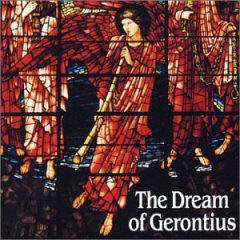
The organ plays a key part in the climactic church scenes of Artemis 81 and Penda’s Fen, with both Stephen and von Drachenfels threatening to shudder the walls and buttresses apart. This is in part another element of transfigured autobiography, Rudkin himself having learned to play the organ as a young man during the course of his music studies. Stephen and Gwen in Penda’s Fen and Artemis 81 respectively are both organ students. It is the gothic instrument par excellence, with a swelling sound of majestic power, irreducibly associated with the religious buildings in which it is often housed, and the richly resonant sound which such stone encasement affords. Classical and sacred music plays a significant part in Rudkin’s work. He scripted the film Testimony (1987), about Shostakovich’s trials in Stalinist Russia, wrote Symphonie Pathetique (1992-5) about Tchaikovsky, and the BBC radio3 play The Haunting of Mahler (1994). It is Elgar’s spirit which presides over Penda’s Fen, inhabiting the Malverns and their surrounds, the landscape which has so inspired his music. Stephen’s analysis of a passage of the Dream of Gerontius at the start of the story immediately establishes the centrality of music to his life, and to his sense of himself and the world. It evokes the power of music, its connection with the landscape, its ability to tangibly evoke complex mental and spiritual states and to approach an expression of the ineffable. Stephen’s statement about Elgar’s great choral work is like a testament of faith. ‘I think the greatest visionary work in English music is The Dream of Gerontius by Sir Edward Elgar. It poses the most important question: what is to happen to my soul?’ He goes on to speak (in an essay composed in his head) of Elgar’s creative gift which an awed reverence, also locating him within a particular sense of place. ‘To be a man…have Heaven and Hell between your ears…and write them down, in notes. And walk those hills: and hear the Angel and the Demon…The Judgement: on those hills’. He will undergo his own Judgement and see his own versions of angels and demons at the end of the story. Stephen definitely feels the spirit of the music, and is attuned to the landscape in which he has grown up, and with which he is so familiar.

Stephen with Elgar - Projected landscapes
We get the sense that Stephen yearns to feel some of the transcendent sensations which Elgar experienced, and maybe find his own way of expressing them. For all the youthful arrogance and unyielding certainty which he displays in the early part of the story, he exhibits a due humility in the face of what he perceives as creative genius. When he meets Elgar in the course of his explorations of the surrounding lanes and fields, the composer appears like another incarnation of the angel which has been looking over him, but which he hasn’t been aware of. This angel he sees, however. The angels in the story tend to be associated with the landscape, the sacred topography, whereas the demons (of which Stephen is far more aware) are more connected with buildings and their interiors, as well as with the tainted fen, with its imagined technocratic underworld. If Elgar is an angel, then he is a very human one. He is old and frail, seated in a wheelchair and confined to an old, crumbling outbuilding. He whispers the secret of the Enigma Variations, the hidden code, to Stephen, as if passing on the flame to a new acolyte. Elgar’s spirit returns to inhabit his own blessed, Edenic place. ‘I come to look at the world, you see’, he points out to Stephen. ‘The lovely world. The silver river and the verdant valley. The beautiful world’. He sees all of this in a dank, featureless wall, to which he points as if it is a screen across which a film plays. It’s an indication of the vivid power of the imagination, the creative vision which contains worlds within and can project them outwards. Rudkin writes in his playscript that ‘he may see the Severn Valley, Cotswold, Bredon. But we, coldly behind Elgar, squarely see only the mouldering wall before his pointing hand’. Stephen is ecstatic after his encounter. As the playscript puts it, ‘he has been vouchsafed an encounter with the noble giant who has haunted him; glimpsed his mortal reality; been told his secret’. The camera-eye point of view soars over the landscape, gliding on the surging updrafts of Elgar’s overture In The South. It’s as if it is following in the slipstream of Stephen’s exultant spirit, finally alighting in his bedroom to focus on the portrait of Elgar on the sleeve of the Gerontius sleeve. The birth and death dates below it are a concrete affirmation of his mortality. The mystery of what happens to the soul, which Stephen had identified as ‘the most important question’ at the heart of the Dream of Gerontius, seems to have found its answer in his visionary meeting with the composer. Elgar’s soul lives on through his music, and through his love of the land and the ‘beautiful world’ which it expresses. ‘If, on the hills, you ever hear an old man’s whistling in the air…don’t be afraid’, Elgar tells him. ‘It will only be me’. It is a tender and benign haunting by a blessed spirit of place.

Von Drachenfels - blind improvising
We’ve already seen how Artemis 81 and Penda’s Fen both include improvisations on church organs as climactic preludes precipitating moments of crisis. Both Stephen and von Drachenfels play music which invites chaos and destruction, an acknowledgement of the power of art to invoke darker forces as well as to elevate the spirit. Von Drachenfels, the great organ maestro in Artemis 81, plays the role of the Elgar figure in Penda’s Fen as far as Gwen is concerned. In his case, however, he actively discourages her from pursuing her dreams of becoming a composer or a virtuoso such as himself. Attempting to make light of her disappointment, she tells Gideon that she’ll have to give up on her ‘though of being another Gillian Weir’. Weir was (and still is) one of the great contemporary organists, particularly renowned for her interpretations of the music of Olivier Messiaen. Von Drachenfels is very much the Faustian figure, the artist whose genius and penetrating vision comes at a great cost to his soul. His discouragement is perhaps an attempt at diverting Gwen from suffering a similar fate, or he may be pushing her towards finding her own voice and style, partly through a more general process of self-discovery and the assertion of personal strength and conviction. He uses her score, which she brings to him to look over and which he half borrows, half steals, to send a coded message to Gideon and herself. His final improvisation, which he knows will be the last piece he will play, uses the theme which she composed as a central motif for it. It seems to be an acknowledgement that he finds worth in her music after all, and considers her to be ready to continue her artistic pursuits in the wake of her transforming experiences. Von Drachenfels eschews the melodrama and grandiose Gothicism which are often associated with the organ, partly due to its placement within the framework of gothic architecture. He vows never to play Bach’s Tocatta and Fugue in D Minor, the hackneyed staple of so many gothic horror films, regarding as a piece of empty showmanship rather than a work of genuinely expressive art. The reduction of creativity to recycled and mass produced cliché is another indication of a world dulled into a mechanised, programmed facsimile of authentic experience. When Gwen and Gideon hear that he is to include a performance of the Tocatta in his programme, they know that he is sending them a signal that all is not right, and that events are reaching a climax. They immediately set out for the abbey at which he will be playing.

The fiery descent
Wagnerian themes and music also permeate Artemis 81. Von Drachenfels himself is a very Wagnerian figure, with his cape, scarf and long sweep of white hair. As he descends the winding stair into the basement beneath his house, the walls are illuminated with baleful red lights as if he is approaching some fiery, molten furnace. The Magic Fire Music from the Valkyrie, the second opera in Wagner’s Ring Cycle, thunders around him. His Brunnhilde lies below, in a state of suspended half-life on a bed surrounded by the flickering electronic fire of medical instrument readouts. The picture on the wall which he looks at before climbing down depicts a woman with winged helmet and spear, suggesting that his wife may indeed at one point sung the role of Brunnhilde. At the end of the story, the immolation music from the final Ring Cycle opera, Gotterdamerung, surges and swells as von Drachenfels joins his love on her burning bed for a last embrace. It all conveys a sense of the grand drama of life, with mythological archetypes resonating through into modern times. Gideon’s descent into the underworld beyond the sick metropolis also approximates the hellish foundries of the dwarves in Niflheim in Wagner’s mythology, where the treasures and material goods are made for the use and pleasure of the gods. Here, the material being forged is human, however, the mind melted down and shaped into a uniform mould. Gideon’s art, his writing, has taken on a similarly joyless and basely materialistic quality. When he leaves Jed, rejecting his attempts to reach out to him, he mumbles a quick and dismissive ‘back to the forge’. It’s a retreat from a genuine connection with the world or with the self, an escape into baseless fantasy. We see him writing on his golf-ball typewriter, the latest technology for an author at the time. The phone is off the hook and Wagner’s Das Rheingold, the first of the Ring Cycle operas, blasts from his boombox in the background. For him, it is mere noise to block out the world, and he is completely shut off from external reality in his glass-walled, high-rise eyrie. Gwen, in real need of his help, tries to get through to him on the phone, but he has taken it off the hook. He is unreachable.

The Ash Tree - shadows of the past
The divided and fragmented self, turned inward and denying a part of its true and whole nature, is a recurrent theme of Rudkin’s work. In The Ash Tree, Sir Richard’s divided self is suggested by the re-emergence of the past in his perceptions of the present. His modern and ‘enlightened’ Jacobean qualities are undermined by the oppressive shadows of Puritan judgement which he sees outlined in the windows and against the flickering firelight. The portrait of his ancestor, Sir Matthew Fell, also looms above him whenever he ascends the stairs, its baleful stare draining away his own character and infecting him with the self-delusion, weakness in the face of authority, and denial of desire which his forbear had displayed. Thus he leaves himself vulnerable to a renewal of the deadly curse delivered by Mistress Mothersole from the scaffold. The fragmented self is reflected in Artemis 81 by images of divided and occluded vision which run throughout the story. We open on a close up of Gideon’s mouth and then his eye, before the camera pulls back and he puts on his large, rounded glasses and uncovers his typewriter, after first taking the phone off the hook. Verbal and visual communication and perception are modes of expression and understanding which he has rejected in favour of writing, of creating his own insular subworlds. The glasses and the other screens through which he sees the world – the windows of his flat, the windscreen of his motorhome and the glass eye of the TV, always on but largely ignored in the corner of his room – become a symbol of his retreat from direct engagement with life. His dream of converting the tower, located on a rise of remote moorland, into a new home would isolate and elevate him completely apart from and above the concerns of the world, and complete the building of his impenetrable self-armoury. Here, too, the stone foundations are topped by a glass walled living space, more screens through which to gaze out at the world without any danger of being touched by it. More screens representing false sub-worlds are found in the story. There are the space invaders arcade games on the ship, the medical screens in the basement which lend an illusion of life to von Drachenfels’ wife, and the false projections of the sea which provide a programmed technological replacement for the natural sublime. Early on in the film, on the ferry over from Denmark, we see a small, rather reserved boy with his mother and a priest. He looks very much like a younger version of Gideon. He too wears large glasses, but one lens is frosted, shattered in some accident. He is shown a dried blue flower pressed in a book, the same blue flower which we will later see growing at the sorrowful sites to which the passengers travel before succumbing to the death impulse which has infected them via the fragments of the Magog statue. Just as the blue flower is a symbol of hope amidst bleak despair, so he carries with him the potential of a brighter future. We glimpse him later on the television news, his mother pulling him away from the self-immolated body of the priest, burning in the streets of a town on the east coast of Northern Ireland. When Gideon looks at himself in the mirror in Helith’s hut, it’s like he is seeing himself for the first time. He doesn’t wear glasses from this point on in the story, an indication that his vision has been ‘cleared’. The traumatic moment of the explosion on the Welsh cliffs which has destroyed his motorhome, the mobile fortress in which he ventures out into the world, has shocked him into a renewed perception of reality.

Artemis 81 - the robotic eye
Language and its construction can also act as a potentially occluding veil, a means of obscuring rather than exploring the true nature of the self. We see Gideon examining the spherical golf ball components of his electronic typewriter, with their letters and symbols raised from the surface, holding them in front of his eye. They look like detachable metallic eyeballs, cyborg organs which enable only mechanical vision. Gideon’s writing, as a result, is soulless and empty, and offers a facile and even dangerous form of escapist wish-fulfilment. With this technology, Gideon is able to erase instinct and authentic feeling, effectively censoring and suppressing his self in an act of semi-automatic self-delusion. This erasure of language can also lead to true vision, the veil of self-deluding words torn aside. This is the key to the riddle etched onto the stained glass in the church by von Drachenfels’ home: ‘such as when these writings shall disappear you shall know my face’. In Gideon’s visionary dream, these words themselves are erased, in a similar way to the erasure of the type on his modern machine. This removal of the barrier of obfuscatory and evasive language, used to keep the authentically real at a distance, allows for vision of the Magog figure, the lumpen chthonic rockform which is the destructive power let loose by Asrael in the world. Seeing his own face beneath the obscuring cowl, in classic dream-revelation style, shows that the heart of this potential for destruction lies in the dislocation and dissociation within and between people. The debased form of Artemis as Magog, a hunched, granitic stone figure twisted painfully in on itself, is an outward projection of Gideon’s soul. His state, unacknowledged by himself, is an example on an individual level of the wider atomisation and the resultant sense of dull despair on a social level that the re-awakening of Magog/Artemis will bring. Phaedra, in Rudkin’s translation of Euripedes Greek tragedy Hippolytus, articulates this state, musing ‘always in me this backing away, from the reality of others, into a still safety of the self that’s no security at all’. Von Drachenfels, talking to Gwen in the ‘confessional’ of the organ booth in his church, likens Gideon to one who is ‘in thrall to Artemis’, just as Hippolytus is in Euripedes play. He is ‘withdrawn, within beyond our reaching – a prisoner in his own nature’. The divided self nurturing and protecting its fragmented nature within an armoured and impenetrable shell of its own careful and thorough construction. Gideon stands by an open grave outside the church, and von Drachenfels subsequently philosophises to Gwen, in the kind of dramatically formal stage language which retains the flavour of Rudkin’s classical interpretations, that beyond ‘that death we die, that ends’, there is also ‘that death whose grave bonds form around us as we live’. This is the living death into which the prisoners of the underworld in the parallel world to which Gideon and Helith cross over are programmed before being sent up to the surface once more. In Penda’s Fen, Stephen’s father talks to him about the division of the self in the modern world, proclaiming that ‘only by being nonselves can we survive in our own mortal shrouds we weave around us. And what shall this ‘survival’ profit us? In this day of the mask, this day of Corporate Man’. Having hijacked the van in which the living dead are being transported and driven it to the surface, Gwen and Gideon abandon them, locked in the back like so much livestock. They consider them to be lost, beyond redemption and scarcely even human. In breaking free of their own conditioning and escaping the underworld, leaving two dead bodies in their wake (their sloughed off selves?), they bring some of its taint of moral disconnection with them to the world above. The people in the van may be wretched, but in abandoning them to their fate, Gwen and Gideon exhibit a lack of compassion and a readiness to judge which takes them a step towards becoming equivalent to the dispassionate operators of the technocratic machinery of control from whom they have just fled.

Penda's Fen - Dream Demons
Gideon’s divided state is revealed to him in a dream which he chooses to ignore. Dreams as conveyors of hidden truths are also important in Penda’s Fen. They become so vital that they break out into the real world, the angels and demons battling within manifesting themselves in palpable form. Stephen’s awareness of his difference, of his homosexuality, emerges in a dream. He sees a mighty, radiant angel descend from the Malverns, and transform within the hall of his school, beneath the Greek inscription reading ‘know thyself’, into one of his classmates, Honeybone, with whom he has a rather fractious relationship. A hand, presumably his own, runs down his naked torso until it reaches his pelvic region, further exploration denied by a burning, brilliant torchlight. Waking up, he finds the gargoyle-like demon squatting at the foot of his bed, and knows himself to be, in his own mind, ‘unnatural’. He also, with innocent naivety and disregard for the potential for mockery, relates one of his dreams to a disinterested teacher during a class, a dream which he suggests is ‘like a parable’. In it, he sees a demon on the roof of his father’s church, and through an effort of will, transforms it into a shining angel. Having discovered his power to transform the nature of these manifestations, he then turns it back into a demon again. He later asks his father about what dreams mean, and is told ‘your dream tells a truth about yourself. A truth you hide from while you are awake. A truth you need to know about yourself. For your…well being’. He goes on to suggest that ‘the responsibility of the dreamer (is) to acknowledge what truth about yourself the dream reveals. Then act upon that truth’. The demon can thus be confronted and transformed into angelic shape, and back again if need be, the marriage of heaven and hell consummated and the demonic and angelic aspects united. The ‘balance of mind’ offered as an ideal by the Greek dictum inscribed on the school wall can thus be achieved, the divided self made whole again.

Artemis 81 - The Hitchcock and Dreyer wall
Cinematic references abound in Artemis 81. They are made explicit by having Gideon’s old friend Jed teach a course in film history and theory. He elucidates the substance of the Hitchcockian undercurrents running through the film in his lecture on Vertigo, and specifically the embrace between James Stewart’s Scottie and Kim Novak’s Madeline/Judy. Jed talks of the camera which circles them as being a moral, consecrating eye, imbuing it with almost religious power. He claims ‘it tells us we do right to dream and for our sanity we must learn to fall’. The transformation of the backdrop around Scottie and Judy, the woman he has moulded into the form of the dead Madeline, as the camera circles them, the cheap motel room at some point disappearing to be replaced by the tower in which he witnessed the fatal, traumatic moment of her fall, is a transition into the emotionally expressive vision of the inner eye. Scottie embraces the first Madeline (who is in fact Judy as well) in front of a turbulent Pacific Ocean which is rather obviously a back projection, an expression of his passionate and troubled inner state. This projection of an unreal ocean is realised in a more literal fashion in the cells of the technocratic underworld, with the indoctrination of the experimental subjects into seeing the sea in an auroral curtain of dry ice and shimmering laser light being a step in the process towards complete mind control. Rather than an expression of overwhelming emotion, it has become instead a means of manipulating feeling and directing the inner eye, dulling the senses and creating a compliant, malleable mentality. Further Vertigo references are found in the scene set in the bell tower in the cathedral of the sick metropolis. Gideon holds on to the ‘Hitchcock blonde’, who is also his idealised image of Gwen, trying, and failing, to save her from falling. He also has his of camera consecrated embrace with the angel Helith, the bleak tower block in which they have found meagre shelter transforming behind them into the safe haven of the sea by which the homely hut in which Gideon had, in all senses, awoken stands. Through offering him his compassion, love and the warmth of his coat, Gideon saves the angel, who has become infected by the sickness of this dark city, a sickness brought about by his brother Asrael. But Gideon also compounds his fall, his descent into the human world, where he now feels the cold and sees his reflection, a level of sensation and self-awareness previously unknown to him. The last we see of Helith, he is sitting on the shore between lake and sea, the planetary moons once more sinking towards the horizon. Now completely alone, his brother for the time being broken and defeated, he clutches Gideon’s coat and gives off a rather pitiful sob.

Artemis 81 - Learning to fall
Gideon has his own Vertigo moment in the abbey towards the end of the story. He looks up at the ladder which stretches up to the roof, and temporarily balks at climbing it, before Gwen urges him on. In the galleries inside, he has to overcome his fear of heights in order to edge along the narrow walkways and reach up to the Magog statue in its nook, preventing it from cracking open and releasing its poisons. Finally, he learns to fall, tumbling from the elevated arches, his face filled with beatific acceptance rather than rigid fear. He survives his fall, the broken leg which he suffers complementing the limp he acquired in the explosion on the clifftops. Both are an outward replacement for the spiritual lameness which has been healed, the physical cost of his inward transformation. More Hitchcockian allusions are to be found at various points in the film. As they approach the abbey along the A road heading east in order to hear von Drachenfels’ recital, a huge, locust-like swarm of crows rushes overhead, as if fleeing an apocalyptic oncoming stormfront. It’s a fairly obvious nod to The Birds. Amongst the posters on Jed’s wall, we see ones for late Hitchcock films: The Birds, Torn Curtain and Family Plot. Jed also has numerous stills from Carl Dreyer’s film Vampyr on his wall. Dreyer is a particular cinematic touchstone for Rudkin. In his bfi Classics book on Vampyr, he testifies that ‘I revere Carl Dreyer more deeply than any other artist of my time’. He cites a circling tracking shot in Dreyer’s Ordet which observes the holy madman Johannes as he comforts the little girl whose mother is dying in the neighbouring room. ‘The camera passes quietly around them in a perfect circle’, he writes, ‘enfolding them and consecrating them’. It is the Vertigo embrace again, suggestive of an intensely focussed inner vision.

Artemis 81 - gothic glow
The gothic is a central visual motif in Artemis 81, and Rudkin and director Alistair Reid summon it up with several references to and borrowings from Hammer films. Red and black are predominant colours throughout, from the red lining of von Drachenfels’ Inverness cape, to the black suit and red tie sported by Asrael in human form. Red light emanates from the porch of von Drachenfels’ church, from the basement below his house and from the tunnel entrance to the technocratic underworld. Asrael and von Drachenfels are both eminently gothic characters. They are generally to be found in or near the gothic surrounds of churches or cathedrals. The name von Drachenfels melds the key character of gothic horror, Dracula, with a prefix denoting Germanic nobility, and the Teutonic roots of the modern gothic. Whilst von Drachenfels looks more like a figure from a Dreyer film, Asrael has the customary well-dressed and suave manner of the monstrous Hammer adversary, be it human or fiend, Cushing or Lee. With his vulpine features and jet black hair swept back from a sharp widow’s peak, he it the traditional image of Satanic persuasion, the smooth face of evil. His final fall from the abbey galleries and impalement on the spike of an iron railing draws directly from the finale of the Hammer film Dracula Has Risen From the Grave, in which Christopher Lee’s Count suffers a similar fate, plunging down onto the sharpened end of a large gold crucifix. In case we miss the allusion, there is also a thin trickle of blood which drools from the corner of Asrael’s gaping mouth. The overhead shot of his face, half-imploring, half full of hissing, animalistic hate, hand reaching our as if to grab hold of life and cling on, is very much akin to the parallel shot in the Hammer film. The scene in the bell tower of the cathedral, in which Gwen/the Hitchcock blonde hangs within the bell, which Asrael sets to ringing, is also a blend of the finale of Vertigo and the beginning of Dracula Has Risen from the Grave. The Hammer film begins with the discovery of a woman’s body, drained of blood, hanging pendant within the bell of the local church, muffling its clangorous morning call to prayer. The plot to release a deadly plague into the world supervised by the vampirically styled Asrael also brings to mind Christopher Lee’s final outing for Hammer as the Count, The Satanic Rites of Dracula. In this intriguing contemporary re-imagining of the cycle, the Dracula has become the head of a corporation, with an office suite at the top of a high rise, and uses his position to synthesise a new and virulent form of the bubonic plague, which he intends to use to precipitate Armageddon, thus ending his cursed eternal half-life. As Gwen and Gideon approach the abbey in her car, frightening and disturbing illusions manifest from a mist in front of Gideon’s windscreen view in an attempt to turn him from their path. Children robed in white sing a ritualistic chant and a headless rider rears up on his horse. They are very much like the phantoms sent to strike fear into the hearts of the characters gathered in a magic pentacle and thus to drive them out of its protective boundary in the Hammer film The Devil Rides Out.


Alternative impalements - Artemis 81 and Dracula Has Risen From the Grave
Penda’s Fen and The Ash Tree also show an awareness of British horror traditions. The former has a flavour of the Arthur Machen and Algernon Blackwood strain of British supernatural fiction, with its re-emergence of long buried Pagan traditions and figures inherent in a particular, localised landscape. Penda’s Fen is one of a good many TV series and plays from the 1970s which were set in rural areas (usually in the West Country) and which found mystery and magic in ancient landscapes. Amongst these, Children of the Stones was filmed in Avebury, The Moon Stallion around Wayland’s Smithy and the White Horse of Uffington, and The Changes roved through a rural Midlands traumatically thrown back into a pre-technological age by what turns out to be the pulsations from a powerful sarsen stone which has been disturbed. These, fine as they all were, were broadcast as children’s programmes, whereas Penda’s Fen was scheduled as an adult drama, and was thus able to deal with adult themes more directly, even though its central character was a boy on the threshold of adulthood. The Ash Tree, with its bucolic backdrop jarringly mixed with acts of base brutality carried out in the lovingly filmed pastoral settings, displays a definite debt to Michael Reeves classic Witchfinder General, which balances similar stark contrasts between the picturesque and the cruel. In Artemis 81, we also see a crude exploitation horror poster on the wall in the dark metropolis, its title, Zitpilakoda, suggestive of a collided Esperanto of East European languages. The imagery is unsubtly Freudian, redolent of the sexual revulsion and fear evident in some horror films and fiction, which reflects Gideon’s former state of mind. A gloating Asrael figure leers out whilst a naked man is grabbed by the claw of a giant crab. A reference to 70s pulp horror writer Guy N Smith, perhaps, who wrote a surprising number of novels featuring giant, flesh-eating crabs, which were an ubiquitous sight on the wire bookracks in newsagents at the time.

Artemis 81 - Tarkovsky interiors
Other film references beyond Hitchcock and British gothic are also evident. The maze of the technocratic underworld which Gideon infiltrates and then escapes from with Gwen is like a James Bond villain’s hi-tech subterraenean lair, as realised on a BBC budget. The poisoned city, with its ramshackle market underneath abandoned factory vaults is like something from Eastern European cinema, with a Kafkaesque sense of the world tilted off its axis of normality. A man with a bowler hat and thickly coiled scarf, and a couple of kids running by in Nazi uniforms add to this atmosphere of an old Eastern Europe of the mind, various aspects from different times gathered together in a temporal collage of imaginary geography. The monumental interior of the cathedral, with its drifting mists suggesting a vastness which generates its own atmospheric conditions, brings to mind Tarkovky’s Andrei Rublev and Stalker, as well as the cathedral interior/exterior which provides the transcendent conclusion to Nostalgia, released a couple of years after Artemis 81 was broadcast. Stalker also begins and ends in a poisoned landscape, in which both the environment and the people who inhabit it have become degraded and sick, physically and spiritually. The lighting in the cathedral sequence, especially in the bell tower sequence, with its long, pronounced shadows and strong contrasts between shadow and light, shows the influence of German expressionism. Metropolis is a particular inspiration for the whole sick city section of the film. Gideon’s bewildered wanderings through this dark urban landscape are also reminiscent of those of the titular character in Alasdair Gray’s novel Lanark as he explores the strange, fantastic city of Unthank, which may be his own personal purgatory. Jean Cocteau and his modern mythological film Orphee is also summoned up when Gideon regards himself in the full length mirror after awakening in Helith’s cottage. He reaches forward to touch his image as if the silvered surface will prove to be a window or doorway, as it does in Orphee and Le Sang d’un Poete. One of the fated passengers on the ferry at the beginning of the story is himself a film director. Gideon goes to visit his wife in the course of tracing the pattern of the ferry suicides. Tristam Guise was known, and notorious, for his ‘shock film’ The Dark Night of the Earth. It sounds like the kind of taboo breaking British picture associated with several directors from the 70s. He is a Lindsay Anderson, Nic Roeg or Ken Russell, with his best years behind him and his fires damped down. Indeed, there is something of Roeg’s Don’t Look Now in the scene in the cathedral, with Gideon being lead breathlessly on by the figure in white, who always remains just tantalisingly ahead of him on the stairs, disappearing through a door or standing for a moment on top of a buttress bridge. Guise’s The Dark Night of the Earth may be a film into which Gideon strays when he passes over with Helith into the dark metropolis, or a preview of what is to come should Magog’s poison be released by Asrael.

Penda's Fen - The British visionary tradition
Rudkin’s TV plays are certainly not without their faults, as he is himself only too ready to admit. On his website, he writes of Artemis 81 ‘I acknowledge that the piece is uneven – in the writing and in the realizing’. Some may find the dialogue too stagey, with the language occasionally taking on the declamatory quality of the mythic rhetoric of classical drama. This creates a distancing effect when used in a modern context, most people expecting contemporary drama to be essentially realist, with speech patterns like those of everyday conversation. Some of the acting, particularly in Artemis 81, can be a little tentative, giving the impression that the characters are notional archetypes rather than fully formed characters. Even this fits in with the general mythological atmosphere, however. BBC budgets didn’t allow for a full realisation of Rudkin’s more elaborately visionary ideas, but, as with Doctor Who over the decades, the imagination can colour in the basic sketch. The accusation of pretentiousness has been levelled at the films, with Artemis 81 once more being especially singled out by the critics, perhaps because by this time the fantastic and the allegorical had lost favour with the cognoscenti. This contempt for anything deemed ‘pretentious’ is a particularly British obsession, the idea of people overreaching themselves being viewed with dismissive disdain. Brian Eno talks about this in one of the appended essays in his book A Year With Swollen Appendices (the essay in question forming one such appendix). ‘In the arts’, he writes, ‘the word ‘pretentious’ has a special meaning: the attempt at something which the critic thinks you have no right even to try’. He decides to turn the word into a compliment. Artemis 81 and Penda’s Fen do stretch audience comprehension and tolerance at times. But they also challenge the viewer. If they have an overriding fault, it’s that they try to include too much – to attempt a grand synthesis of the personal and the political, the philosophical, mythological and spiritual. If this results in failure, then a least it’s a noble one, the result of huge ambition and a desire to draw everything together to form a new Blakean worldview. As such, these films are in the great tradition of visionary English art, which always slips in and out of tradition, but remains as an ineradicable undercurrent; from Milton to Blake, the new-Romantics (Paul Nash, Cecil Collins and David Jones) to Derek Jarman and Andrew Kotting, through to the modern resurgence of interest in musical explorations of the mysteries underlying English landscape and memory (as typified by Damon Albarn’s new opera based around the life and work of the Elizabethan astrologer John Dee). It would be good to see more attempts to construct such overarching modern mythologies, to resurrect the British visionary spirit once more. Penda’s Fen currently remains unreleased on dvd, having failed to make into the recent Alan Clarke box set, having perhaps been deemed out of step with the rest of his work. A shame.

PART ONE
PART TWO
PART THREE

Friday, 4 May 2012

Trembling Bells, Bonnie Prince Billy and Muldoon's Picnic at the Exeter Phoenix


Trembling Bells and Bonnie Prince Billy played at the Exeter Phoenix on the last day of April (Beltane night), showcasing the songs from their recent collaborative LP The Marble Downs. It’s a wholly successful meeting of the harsh romance of the backstreets of Glasgow with the shadowy and remote backwoods of Kentucky, the British folk roots upon which Trembling Bells build their foundations combining with its transmuted Transatlantic forms. This is an album which essentially involves the king (or prince) of dark and twisted American folk taking over from frontman (although on stage he's generally to be found sitting unassumingly at the back behind his drumkit) Alex Neilson in providing vocal counterpoint to the pure and soaring soprano of Lavinia Blackwell. Neilson writes most of the material on the new album, seemingly tailoring many of the songs to fit Billy’s stage persona (a separate entity from Will Oldham, the real person behind it), although this may simply be the result of a happy confluence of thematic interests, two similar souls finding common ground in unwholesome preoccupations. These are songs full of bitterness at love left bleeding, desperate and occasionally pathetic longing, drunken self-pity, suicide attempts, cynical disavowals of the possibility of true romance, biblical allusions (all Old Testament, of course), with occasional hints of incipient murderous psychosis. The booklet art by Lucy Stein also seems designed to fit in with the Bonnie Prince’s upfront, frequently twisted and decidedly grubby sexuality. It’s roughly sketched imagery, seemingly scrawled directly from the uninhibited subconscious, is along way from Lavinia Blackwell’s illustrations for the booklet of the first Trembling Bells LP Carbeth, which drew on details from William Blake’s illustrated books. Her cover for the new album looks like a woodcut or lino print depicting a Samuel Palmer Shoreham-like village all aglow in the rising or setting sun. In the inside sleeve, the Trembling Bells quartet stand in front of a church, looking on rather nervously as Billy crouches down in front of them, his arms stretched before him as if he is about to begin an incantation, or attempt an act of magical levitation.

Before Trembling Bells took to the stage, the support group Muldoon’s Picnic performed an excellent 30 minute set. Who is or was Muldoon, I wondered, and where did he like to lay out his picnic. All was made clear on the group’s website, which informs us that it was a 19th century Irish American music hall act popular in New York. So popular, in fact, that the phrase Muldoon’s picnic found its way into common parlance, with reference to any wild coming together of vaguely roguish or disreputable sorts. Muldoon’s Picnic are an a capella group who sing a variety of mainly traditional tunes. On this night they were present in the slightly diminished form of Harry Campbell and Katy Cooper, fine Yorkshire folk both, if my ear for an accent is accurate. They were joined on stage by Alex and Lavinia from Trembling Bells, and also by Bonnie Prince Billy for one number. Their songs covered a wide geographic range within the British Isles, beginning with a paean of praise to the homelands of Yorkshire, travelling north to Glasgow, and then back down south to Oxford and Sussex. There were a number of configurations on stage, with various people disappearing into the shadows and reappearing again later. The initial quartet split to give Alex a solo turn, with Campbell and Cooper also singing a few duets. They usually mix material from around the world and throughout history (as you can hear at their Myspace site), from Breton and East European songs to medieval ballads, Sacred Harp hymns, shanties and French Canadian rounds. But tonight, in their depleted state, and perhaps in honour of the coming May Day, and playing to the strengths of their guest members, they confined themselves to British songs. Although Lavinia would have been more than comfortable with early music, an area which she has studied in depth.

Bells and Muldoons
Several pieces bore the signature style of Alex Neilson’s pen, being scattered with literary and artistic allusions, and shot through with his customary fatalistic romanticism. Some of the songs had appeared on the recent Duchess EP, which featured the coming together of the Trembling Bells and Muldoon’s Picnic factions on the second side. There’s Nothing Nobler than Yorkshire, with its percussive foot stomp after the first line emphasising the sentiment, in October is a proud evocation of the autumn atmospheres of the county, providing a poetic cartography in the form of a litany of locales, from ‘Hull to Applethwaite’, taking in the ‘mighty Humber’ and the Bay of Scarborough. From Hale to the Pearly Gates, it locates the sacred in its dales and along its coastline. Bells of Oxford, which cheekily dares to begin with a moon/June rhyme, summons up Edenic days, marked in true folk refrain fashion by ‘the sound of the bells of Oxford-o’, before lamenting their loss. Reference is made to Jane Morris, married to William Morris and pined after by Dante Gabriel Rossetti; the pre-Raphaelite muse who was ‘the midwife to a million brushstrokes’. Tuning Fork of the Earth was a sensuously Pagan hymn, full of lusty mysticism, finding the spirit of the land within one particular body. Tincture of Tears takes us to Sussex, and is a bittersweet meditation on beauty, which is ‘always tempered by the fingerprint of pain’. The nightingale is ‘choking on a worm’, and the singer looks out on the Sussex landscape, ‘a poem froze in clay’, and feels as if he’s ‘enacting all those Copper songs, as in some ancient play’. Sculptor, stone carver and advocate of communal dwelling and free love Eric Gill got a mention in there somewhere, too, probably in the context of his Ditchling community in East Sussex. In a song I’d not heard before. The experimental film-maker Maya Deren, a heroine of mine, got her own featured refrain in the impressionistic, Glasgow-set The Day That Maya Deren Died (probably not the actually title of the song, but that was the repeated chorus line), sung solo by Alex. The songs were delivered with great conviction and passion, voices joining in radiant and sonorous harmonies, often of an unusual and striking pitch, whilst remaining entirely consonant and richly expressive. They brought to mind other a capella folk gatherings: The Copper Family, The Watersons, Swan Arcade and Coope, Boyes and Simpson. Indeed, they performed a spirited version of the celebratory Watersons song Bright Phoebus, a tribute to and acknowledgement of honourable antecedents. Blackwell and Neilson’s participation, and the ease with which Neilson’s songs fitted into the tradition, highlighted the extent to which folk music underpins the Trembling Bells sound. Later, they would apologise for not hanging around after the gig, as they were anxious to head down to Cornwall, so that they could witness the May Day celebrations in Padstow, with its famous hobby horse parading through the streets. Attempting to sum up the atmosphere, Lavinia said that everything goes ‘a bit skewiff’ – an English phrase which I’d not heard for a while, but will now reintroduce into my vocabulary. She also ribbed Alex about always having wanted to be a morris dancer. Evidently she hit a raw nerve, as he responded with a spluttered ‘ahh, shut up’. There’s nowt wrong wi’t, anyway. Morris dancing has become one of those easy comic targets, with an unspoken agreement that it is a national embarrassment. A recent BBC4 documentary by the Unthank sisters on English dancing customs and rituals hopefully went some way towards putting paid to that notion, however. You can get an idea of what the Muldoon/Bells axis sounded like from a session they recorded for Marc Riley’s Radio 6 show a short while back, over here.

Trembling Bells played the opening track from their new LP, I Made A Date With An Open Vein, early on. Its dramatic intro, with Lavinia Blackwell’s soprano steadily rising in a dramatic upward sweep, brought to my mind the wordless vocal passages in Carl Neilsen’s and Vaughan Williams’ Third Symphonies, both evoking expansive pastoral landscapes. Here it acts as an angelic prelude to Bonnie Prince Billy’s ascent into the heavenly kingdom, his character having killed himself (for love, of course). Any hint that he may have attained unlikely sainthood are immediately dashed, however, as, having found that is love is not there, he swiftly ‘bailed out of that gold fucking cloud’. In its blunt rejection of a celestial and incorporeal paradise, it’s an early indication that the concerns of the songs to be sung will be unapologetically earthbound and concerned with more palpable pleasures. Starting the song with the singing subject’s suicide also introduces what will be a recurring lyrical theme. It turns up again in Love Is A Velvet Noose ,with its opening lines ‘as I rode out on Valentine’s Day/All down to Beachy Head’ (Beachy Head being a high outcropping cliff on the south coast of Sussex notorious for attracting suicides). Another song is based on a poem by Dorothy Parker, who wrote her own darkly humorous meditation on the particular difficulties associated with different suicide methods, Might as Well Live. These suicide references, often in otherwise stirring songs, are an extreme expression of the strain of doomed romance which runs throughout Neilson’s writing. If not at the end of a rope, along the edge of a razor blade or from the foot of a cliff, the failure of the romantic ideal is often viewed through the wrong end of a cheap bottle of whisky. The boozy ballads of loss and longing are a reflection of Trembling Bells’ base in Glasgow, a city in which alcohol and a fierce romanticism have long been fierce bedfellows. In Ain’t Nothing Wrong With a Little Loving, Lavinia sings ‘I’ve longed for gin oblivion’, whilst the second line of Love Is A Velvet Noose finds our abject singer, approaching his end at Beachy Head, mournfully declaring ‘my liver felt like a suicide note to Johnnie Walker Red’. Billy also sings the unseasonal New Year’s Eve’s The Loneliest Night of the Year from the perspective of another heartbroken romantic whose been drinking ‘since September’, and Lavinia played some of her finest Chas (or is it Dave) barroom piano for the chirpy encore song of self-pitying alcoholism, You Are On the Bottom (and the Bottle’s On My Mind) – another of the blurry after hours numbers which often seem to round off Trembling Bells LPs.

Grace Slick and Marty Balin - this doesn't happen
I Made A Date With An Open Vein has Lavinia Blackwell, after her mesmerising introductory operatics, joining with the rest of the band in providing backing vocals and chorus responses behind Bonnie Prince Billy’s passionately delivered lead. Other songs, however, are structured around duets, with Billy and Lavinia taking on sparring, call and response roles, alternating fighting, pleading or cutting lines. Hearing Billy and Blackwell sing together and to each other recalls other duetting male and female vocalists: Marty Balin and Grace Slick in Jefferson Airplane; Lee Hazelwood and Nancy Sinatra; Serge Gainsbourg and Jane Birkin; Sandy Denny and Ian Matthews in the early Fairport Convention; and Johnny Cash and June Carter. In performance, however, they inhabit different worlds, with none of the facing off and throwing back and forth of fragments of vocal lines which Marty and Grace shared in Jefferson Airplane’s pomp. Blackwell is too busy concentrating on her keyboard playing whilst simultaneously singing, and Billy becomes absorbed in private ecstasies. They make for an interestingly contrasting pair, both vocally and visually. Their voices provide a good counterpoint to each other, their distinct qualities balancing well. Bonnie Prince Billy’s emotive waver, with its country catch in the voice, is set against Lavinia’s classically clear soprano, with its controlled range and dynamics. Visually, Lavinia stands tall behind her electric piano/organ, fairly still and restrained throughout, and elegantly attired in a sixties style dress. Billy, meanwhile, maintains a determinedly anti-glamorous look, wearing an old t-shirt that’s evidently a size too small, a beany pushed back on his balding bonce, which is circled by a wild thicket of hair. His beard is at medium magnitude, not as bushy as it can be but still a fulsome growth. He sways and capers throughout, waving he arms about in spasmodic, crook-elbowed gestures which recall the throaty ecstasies of Joe Cocker, and tends to hold them behind his back at intervals, proudly thrusting out his rounded belly as if in a prominent display of his finest, most alluring feature. He generally plays the role of the lusty ape, the strutting primate to the hilt. There’s a definite element of humour to the Bonnie Prince persona, a consciousness on Will Oldham’s part of the inherent absurdity of such a character, which makes the potentially oppressively downbeat subject matter of many of the songs sung tonight somehow light and even amusing. Several of these songs find him pitted against the icy aloofness of Lavinia’s characters, and the duets generally trace the end of the affair, the recriminations in the wake of the break up. It has to be said, she’s probably better off without him. Blackwell provides a contradictory voice to counteract Billy’s self-absorption, highlighting his self-indulgences and undermining any tendency towards self-mythologisation. OLove is a Velvet Noose and the driving Ain’t Nothing Wrong With a Little Loving are both ‘argument’ songs, but the insult-based duets reach their peak on the number which brought the pre-encore performance to a rousing close, I Can Tell You’re Leaving. Here again, Blackwell’s voice was at its dramatic height on the introduction to the chorus, singing I Can Tell You’re Leaving with a thrilling, rising melismatic swell. Billy regains a little swagger after the maudlin emotional abjection and affection of disdain on previous duets, threatening that ‘like Merle Haggard, you’ll see the fighting side of me’. Not being familiar with Haggard’s work, I’m not sure what this alludes to. Maybe he’s confusing him with Marvin Hagler. In line with the sense of self-conscious absurdism and role-playing, there’s an element of auto-criticism in some of the lines which Blackwell sings. ‘You fetishize your grief’, she responds to Billy, and ‘you’re a prisoner in your own work’. This could be both Neilson making a wry comment on his own lyrical tendencies, or a little gentle poke at Bonnie Prince Billy’s reputation for eagerly embracing darkness.

The Duchess EP cover - sunset to The Marble Downs' sunrise
There were also songs where Billy and Lavinia alternated verses. This was particularly effective in the Dorothy Parker-based song Adventures in Assonance, for which Blackwell set her words to music. It’s not a poem which I can find in my copy of the Penguin Dorothy Parker. But it’s a lovely evocation of loneliness and isolation in which Paker bares the vulnerable soul which she protected behind a formidable and impenetrable shield of ascerbic wit. On other numbers, Billy takes to the fore, including howling out his own Riding, a raging tempest of a song in which he incestuously declares ‘I love my sister Lisa most of all’. Lavinia acts as an interrogatory voice, and then an admonitory, nagging shred of conscience (‘don’t you know that’s sinful boy’). All to no avail, of course. Billy is as intent as ever on his own damnation. Every Time I Close My Eyes (We’re Back There), on the other hand, appears to be a murder ballad, with Billy obeying the voice of Proverbs 31, reflecting that ‘the ultimate act of possession is homicidal love’, and living in tormented regret forever afterwards. Lavinia’s voice comes in as a ghostly reminder of heaven once more needlessly cast aside, Kylie to his Nick Cave. The darkness was temporarily dispersed by the hymnal Lord Bless Us All, a luscious lullaby written by Bee Gee Robin Gibb from his 1970 solo LP Robin’s Reign. ‘When you sleep, London streets are silent’, he wrote. ‘All the world is filled with song…Lord let all be blessed’. It is a blissful vision, and after the lyrical benediction, Lavinia’s soprano rises up to regions of wordless, transcendent praise, pushing up against but never quite breaking beyond the barriers of freeform wailing in a Patty Waters or Charalambides style. Sadly, they didn’t perform their version of Scott Walker’s Duchess, released on the recent EP, tonight. But they delved into the back catalogue for the encore and delivered a scorching Love Made An Outlaw of My Heart from the Abandoned Love LP, with Bonnie Prince Billy giving it his full, impassioned heart and soul, body wrenched with imploring gesticulations.

The band were fantastic. Alex Neilson’s ceaselessly inventive drumming really gives the music its structural base, allowing it to shift tempi with effortless and unforced ease, and hanging verses and choruses on unconventional metres without making it all seem contrived and prog-marched. This rhythmic fluidity gives the songs a multi-part, kaleidoscopic structure, always turning and realigning themselves. It lends them an epic quality, and a literary sense of offering differing perspectives. Lavinia stood behind her red keyboard, her playing veering between an electric piano sound and sweeping tides of swirling 60s organ. The former was effective for the group’s ballad side, and was particularly affecting in the slow arpeggios which backed the melancholic, yearning Excursions into Assonance. In the latter section of Every Time I Close My Eyes (We’re Back There), she played church organ-like cadences which seemed to soothe even the tormented soul of Billy. Ain’t Nothing Wrong With a Little Loving brought Trembling Bells’ 70s rock affiliations to the fore, and Lavinia provided streaming currents of organ chords along which the song glided. In Lord Bless Us All, the organ shimmered with a glorious radiance which ascended heavenwards with her voice. Of the bassist, Simon Shaw, I can’t say much, not having much of an ear for the instrument, but he certainly never faltered or placed a note or beat out of place. Mike Hastings’ guitar was sublime, with its characteristic vibrato shiver, reminiscent of the 60s Bay Area sound of John Cipollina of Quicksilver Messenger Service and Jorma Kaukonen of Jefferson Airplane, as well as their modern incarnation, Michio Kurihara, guitarist with Japanese band Ghost and frequent collaborator with Damon and Naomi. Hastings played fluid patterns up and across the fretboard, fleet, mercurial and singing. His guitar could actually have done with being a little louder at some points. Perhaps it was considered that this was a night for the vocalists to take precedence. His slightly off pitch riffs and variations in Ain’t Nothing Wrong With a Little Longing tilted Lavinia’s organ chords at an oblique angle, making the onrushing intro seem thrillingly on the verge of spinning out of control. On Riding, he lashed out with a fiery descending riff from the upper register of the fretboard, which expressed the fevered state of Bonnie Prince Billy’s possessed soul in the song, giving a good impression of where he might be headed. In the encore he was given his moment in Love Made An Outlaw of My Heart to really let rip, scoring searing slide clusters beyond the edge of the fretboard which sparked off in a meteor shower of free jazz noise reminiscent of Sonny Sharrock at his most ecstatically abandoned. He’s definitely, along with Michio Kurihara, one of my favourite modern guitarists. Just as Trembling Bells are one of my favourite current bands – and happily they wholly lived up to expectations tonight. Hopefully they’ll return soon.


Wednesday, 2 May 2012

David Rudkin: Penda's Fen, The Ash Tree and Artemis 81

PART THREE

Artemis 81 - The eternal struggle
Rudkin’s stories are steeped in a rich blend of mythology and religion, from which he creates his own hybrid mixtures. It’s a Blakean synthesis which digs down to discover the common roots of different belief systems, to trace the divine ground which Aldous Huxley attempted to outline in his book on the mystical traditions of the world’s religions, The Perennial Philosophy. He’s also concerned with rediscovering a more authentic form of religion, one which will embrace difference and accord more honestly with human psychology, and which will provide the moral and spiritual basis for a new kind of dissidence; One which will oppose the crushing systems of control and power associated with a purely materialistic worldview with an alternative set of values. The struggles in the plays, on both an individual, political and spiritual level, are represented through archetypal figures projected beyond the ‘ordinary’ characters. This magnifies their human struggles, elevating them to the level at which universal and eternal forces are played out, the clash of angels and demons. In Artemis 81, the angel Helith shows Gideon a medieval wall painting in a Danish church depicting and angel and a demon facing off against each other, a red dragon standing between them, representing the raw, primal power they would seek either to unleash or keep in abeyance. Gideon also glimpses the true nature of the events unfolding around him, and its connection with the state of his own divided self, in the stained glass of an old English church, and through a single diamond pane within it – seeing through a glass clearly. This is an unending conflict which has been waged down the ages, an ongoing duel between the binary Manichean forces of light and darkness, life and death, creation and destruction, love and hate, Eros and Thanatos, with each attempting to gain pre-eminence in the world and in the human spirit. They are part of a single, unified whole, essentially indivisible. If one is destroyed, the whole will perish. This notion also links in with the Taoist concept of the balance of opposites, and the dynamic flux which sees each go through periods of dominance and recession. The darkness contains the seeds of light, and vice-versa. On the bleak shores of Wastwater in the Lake District, where the container driver from the ferry parked and settled down to wait for his lonely death, Gideon finds a single small blue flower growing. There are more on the borders of the melting snow in the Dartmoor farmyard to which another of the ferry passengers returned before plunging into the deep waters at the bottom of an old quarry. Small indicators of nascent hope in an otherwise dark time.

Artemis 81 - The blue flower
The figure of the child of light occurs in several of Rudkin’s plays, most prominently in the Sons of Light. Stephen in Penda’s Fen is also potentially such a figure. His father, the Church of England vicar, explains the nature of the Manichean struggle and of the sons of light to him. ‘The Manicheans…believed that light was a vulnerable spark in man, under constant attack from the forces of darkness. They hoped for some great Son of Light Himself to come, to vanquish darkness and set light free’. Near the beginning of the story, Stephen looks up to see the inscription Fiat Lux written on the ceiling around a skylight – let there be light. As he becomes aware of he homosexuality and of his mixed parentage, he comes to realise that he contains opposites, a self which reflects the manifold diversity of being on an individual, national and universal level – a glorious impurity. He encounters the ‘mother and father of England’, the conservative Christian couple featured in a newspaper article condemning a television programme of ‘investigative theology’ entitled ‘Who Was Jesus?’, on the ridge of the Malverns during the climactic visionary trial which marks his coming of age. ‘Such a light in his eyes’, the man proclaims. ‘It is He. It is He. He has the light’. ‘You have to come with us’, the mother pleadingly insists. ‘You are our Child of Light. You have to be born in us. Then you become pure Light’. But Stephen, who in a school debate had held the couple up as an ideal of conservative dissent, now firmly rejects the role into which they would cast him, and the power they would have him exercise in their cause. ‘No’, he cries. ‘I am nothing pure. My race is mixed, my sex is mixed, I am woman and man, and light with darkness, mixed, mixed. I am nothing special, nothing pure. I am mud and flame’. King Penda, the last Pagan ruler of England, having cast out the would be mother and father of the nation, who would destroy Stephen rather than have him reject their values, offers a different view of his sacred nature and destiny. He gives him his blessing, placing his hand on his bowed head, and says ‘Stephen be secret, child be strange: dark, true, impure and dissonant. Cherish our flame. Our dawn shall come’. No fire of revelation consuming the world in violent revolution, but a slow transformation effected over the years, beginning in the resolution of the conflict within one young man’s divided self.

Stephen’s father talks of Paganism in relation to the Joan of Arc story, to demonstrate the way in which religion and national myths of heroism and martyrdom meld, and are remodelled and adapted according to the needs and purposes of the times. ‘What was she?’ he wonders. ‘There is some evidence she might even have not been Christian. But that she practised what is called the old religion. The primitive religion of the villages and fields’. When Stephen makes the reflexive, doctrinaire assumption that this equates with devil worship, his father quietly points out to him that ‘when a church, any church, goes to war against an older god, she has to call the older god the ‘devil’’. Looking out over the Worcestershire landscape, with the Malverns in the background, he goes on to think about King Penda, ‘last of his kind, last Pagan king in England, fighting his last battle against the new machine’. The spirit of place infects him, the evening atmosphere spurring his imagination, and he wonders ‘what mystery of this land went down with him forever? What…wisdom? When Penda fell, what dark old Son of Light went out?’

Artemis 81 - The Goddess awakes
Religion is a powerful and constant force in Rudkin’s work, but it also takes on perverted and poisonous forms, particularly in a modern context, in which the world is increasingly desacralised and technology regiments people’s lives. In Artemis 81, the Goddess Artemis is re-awakened in her primitive, half-formed incarnation as Magog and used for malign ends. She becomes an embodiment of the death impulse, of the drive towards division and destruction on an individual and social level. With Asrael as her dark high priest, she becomes the figurehead for a technocratic world in which people have become isolated from one another and from a sense of the sacred. It is in a latterday Frankensteinian laboratory that Asrael synthesises the poison which will spread a plague of physical and spiritual sickness throughout the land, the likes of which Gideon experiences in the dark metropolis into which he and Helith pass over. In Penda’s Fen, the radical playwright William Arne suggests that the technocratic underworld which he believes is being constructed under the fen is a way of appropriating and perverting the old sacred sense of place. ‘Again and again everywhere you will find these sick laboratories built on or beneath such haunted sites’, he argues. ‘As though thereby to bottle the primal genie of the earth; and to pervert him’.

The Ash Tree - unholy birth
King Penda and the mother and father of England represent the opposing archetypal forces in Penda’s Fen. A similar division between Pagan forces and a repressive Christianity is found in The Ash Tree, in the opposition between Mistress Mothersole and the Puritan witchfinders. MR James’ choice of the symbolically resonant name points to a further opposition between the male nature of the Puritan ethos of the time and the matriarchal aspect of the old religion which it was intent on destroying. The idea of the revenant spirit of the witch giving birth to monstrous parasitic spiders suggests a certain revulsion on James’ part at the idea of the sacralisation of the female, and of the natural world (here represented by the titular tree). In the story, the two generations of the Fells both die in bed, and the descriptions of their demise both have a certain (presumably unconsciously) suggestive element. Of Sir Matthew he writes ‘the Body was very much Disorder’d as it laid in the Bed, being twisted after so extream a sort as gave too probable Conjecture that my worthy Friend and Patron had expir’d in great Pain and Agony’. Of Sir Richard: ‘it seems as if Sir Richard were moving his head rapidly to and for with only the slightest possible sound. And now you would guess, so deceptive is the half-darkness, that he had several heads, round and brownish, which move back and forward, even as low as his chest’. Rudkin makes sure that we comprehend in full the underlying impulses behind James’ revulsion. Mistress Mothersole’s skeleton, when unearthed, squats in the earth with its legs splayed apart. It’s an image of birth and death combined, a literalised delivery of a curse in the form of an anti-life form. Through using birth as a means of revenge, the sacred is profaned. The perverse and destructive darkness at the heart of the Puritan witchhunting religion is passed on like the infection left on the surface of Sir Matthew’s blackened skin, which burns the fingers of his fiancé when she touches him. Rudkin initially portrays the old religion in a positive light, with Mistress Mothersole as an attractive and friendly young woman. But it is infected by the Puritan persecution, awakening its own seeds of dark perversity. In the end, Mistress Mothersole’s withered corpse looks like an ancient and malevolent icon, like the half-formed mass of the Magog figure in Artemis 81.

Penda's Fen - The mother and father of England approach
The opposing forces in Artemis 81 are clearly delineated from the outset. The angels of light and darkness approach from the opposite ends of the spit of sand dividing lake from ocean, and from either side of the screen. One is dressed in white, with fair hair, the other in black, with dark hair. One speaks with a light, lilting voice, the other with a reptilian hiss. There’s an almost comic strip clarity to the division. The fact that Helith (the angel of light) refers to his opposite as ‘brother’ indicates that these are two halves of a whole, however, currently at an apogee of divergence. They are echoed by the twin moons descending in the sky. Helith’s plea that his brother should not wake the statue which stands by the single tree suggests that at some other time they might share some commonality of purpose. But they are now completely at odds with each other, a divided self. The dark angel, Asrael, awakes their mother, bringing the old religion back to life. As in The Ash Tree, it will take a perverted form, anti-life and instinctively destructive. A Thanatos-like force, exerting a mesmeric gravitational attraction towards Death. In Penda’s Fen, the mother and father of a rigidly conservative Christian England appear in Stephen’s dream presiding over a castrating ritual in which blandly happy men, women and children walk with eager passivity to a chopping block, where there hands are cut off by a smiling man with a meat cleaver. For Stephen, an organist, this would of course mean the death of his means of creative expression, and his exploration of his self and its relation to the world through music. In his climactic encounter with the menacingly approaching figures of the mother and father, climbing towards him on the ridge of the Malverns with arms outstretched, they quickly turn against him and become malign. They are the unprepossessing embodiments of a religion which has become ossified and dead, concerned only with enforcing its own narrow and fearful worldview. As such, they are dangerous, their fear infectious, and King Penda destroys them in a flash of fire and smoke. He identifies them as the ‘true dark enemies of England. Sick Father and Mother, who would have us children for ever’. The new angels will be those filled with the fire of sacred disobedience. Giving Stephen his blessing, Penda passes on his guardianship of the spirit of the land: ‘the flame is in your hands’, he tells him. ‘We trust in you: our sacred demon of ungovernableness. Cherish the flame, we shall rest easy’.

Religion is seen by Rudkin as a conduit for primal forces, which are expressed in varying forms over the years. The playwright William Arne in Penda’s Fen speculates that ‘the spire of a church acts as an aerial, attracting around it the old elemental forces of light and darkness in combat’. Each current version of religion reinterprets the older forms and recasts their stories and sacred figures to conform to its own worldview, but there is a certain ground remaining constant beneath the detail of the surface contours. The scholar whom Gideon encounters in the Oxford library talks of the numerous guises in which Artemis has been found over the centuries, transforming through incarnations as Mary, Morgan le Fay and, behind them all, the primal form of Magog. He enthusiastically outlines her different aspects, as Diana of the Ephesians, ‘wild and cruel’, ‘a tower headed mother’, and the Moon, which ‘hatches each new creature into being’. These aspects embrace seemingly contradictory qualities, representing ‘virginity, castration, pregnancy’ and, as we see, a terrible potential for destructive hatred, an anti-life force which is the direct opposite to that impulse which leads to birth and creation. In Penda’s Fen, Stephen’s father contemplates the development of religious beliefs in his ‘blasphemous’ attempts to get to the roots of Christianity and resurrect its original spirit. He describes Jesus as being ‘only one of many Sons of Light. In an unending succession of them, in an unending battle, to save man’s spark of light’. Stephen uncovers his unpublished manuscript ‘The Buried Jesus’, which attempts to revive Christ as a radical and challenging figure for the modern age. He also has a book called The Lost Gods of England, itself a polemical work, written by Brian Branston and published in 1957, which studied the old beliefs and culture of the Anglo-Saxon country. Its last chapter is provocatively titled Balder into Christ, and charts a localised evolution and progression of belief systems and the continuity in their visual expression. Branston brings his book to a conclusion with an argument that Christianity as experienced by the Old English was a continuation of the cult of ‘Mother Earth, Frig, Freya, Freya and Balder’ (variants of the mother and the son, or the Goddess and the ‘bleeding god’), with the concomittant winter birth and the death and resurrection of spring, and the sense of divine presence immanent in the landscape and its seasonally changing nature. Parts of the last paragraph could be taken from one of Stephen’s father’s speeches: ‘The modern Christ has been crucified on the wheels of industry created by science’, writes Branston, ‘and his body buried under a slagheap from whose smoky and infertile clinker no growth comes, no resurrection can be expected. What the Northmen were unable to achieve in their Ragnarok, namely to keep under the god of fertility, we moderns, children of Science and the Industrial Revolution, have succeeded in doing’. Stephen’s father tells him ‘we crucify him over and over’, and points to the church in which he conducts services, adding ‘over and over in that church, I crucify Him’. In the church, towards the end, when Stephen plays the organ and approaches the wrenching, dissonant chord which accompanies the glimpse of God’s face in Elgar’s The Dream of Gerontius, Rudkin’s playscript (it doesn’t occur in the version as filmed) has the fearful statue of the crucified Christ speak to him. ‘Unbury me’, it implores him. ‘Free me from this tree’.

Penda's Fen - Aisle rift
Both Artemis 81 and Penda’s Fen feature climactic scenes set in churches. In Penda’s Fen, Stephen sits alone playing the organ in his father’s church. His increasingly wild improvisation builds up to a dissonant crescendo which creates a rift cracking apart the stones of the aisle behind him. It is a projection of the fissures opening up in his psyche, and in his previously rigid and narrow worldview, and prefigures his moment of apotheosis on the Malverns. Three churches feature in Artemis 81. There’s the church which adjoins von Drachenfels’ house, where Gwen and Gideon go to meet him, after Gwen has made his acquaintance on the ferry from Denmark, and where Gideon has his dream revelation, pointing him towards self-knowledge and an awareness of the awakening of the Goddess. There is the cathedral in the dark metropolis, in which Gideon attempts to save the ‘Hitchcock blonde’, looking helplessly on as she plummets to her death. A cathedral which is a monument to powerlessness and despair. Finally, there is the abbey in which von Drachenfels plays his final organ improvisation, and from the galleries of which Gideon must prevent the statue of Magog from cracking open and releasing its poison into the world, learning to fall in the process. In The Ash Tree, too, the terrible events which befall Sir Matthew are precipitated by the unearthing of Mistress Mothersole’s grave in order to expand the church and add on a private pew. In each case, the disruption of the church buildings, the shaking of their foundations, and the staging of dramatic events within their aged stones signifies a moment of crisis in the nature of the beliefs to which they stand as a monument.

To be concluded...

PART ONE
PART TWO
PART FOUR